When planning your day, completing an assignment, or planning a trip, you are most likely participating in project management at some capacity.
Project management is the “process of supervising the work of a team to achieve all project goals within the given constraints” (Wikipedia). This way of working sets you and your team up for success in getting from point A (the objective) to point B (the result) (ProjectManager). Project management prevents chaos, sets purpose, builds direction, drives progress, and ensures control throughout the process (Aldridge).
I use project management skills in my work, school, and in my social life. Personally, my brain works best when I can see everything I need to do written down and organized. It helps me not only stay focused on tasks but also ensure I am doing them to the best of my abilities. Without my to-do lists and organization, I would constantly be doing mental multitasking. Thinking about multiple tasks at once and trying to be productive actually causes more errors and delays across all processes.
The process for progress
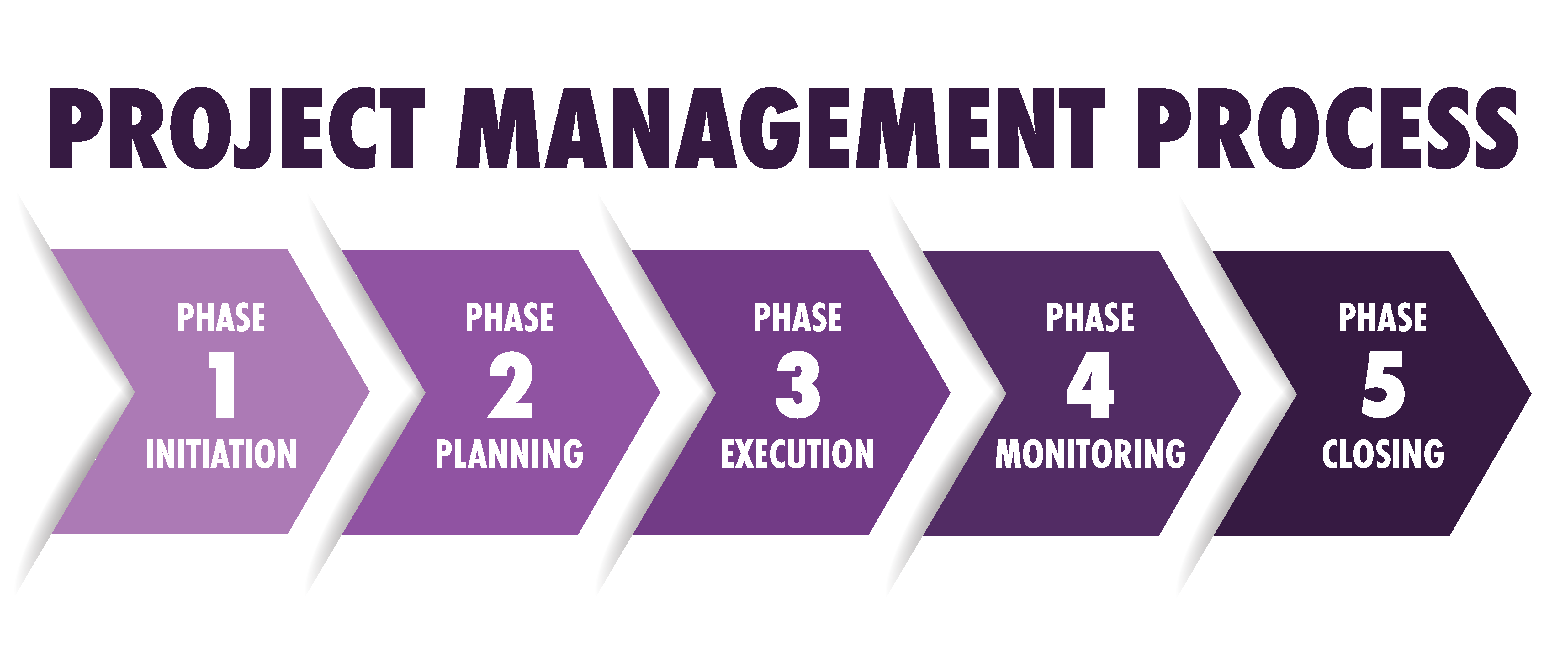
Everyone has different techniques for project management, but many follow a standard workflow to keep them on track (Aldridge).
Phase 1: Initiation – Define the scope and objective
Phase 2: Planning – Create the timeline and allocate resources
Phase 3: Execution – The process is progressing, and the deliverables are being created
Phase 4: Monitoring – Measures cost, time, and quality to ensure projects stay aligned
Phase 5: Closing – The end of a process where files and data are finalized and released
Managing my own time
At work, our team has a process monitored by project managers. We typically follow a whole-team kickoff meeting process to go over the project brief, allocate assignments, and clarify timing. The current workload is also analyzed to discuss priorities. Then, as the designer, I set checkpoints for myself to allow time for feedback and edits to meet the due date. For my own record, I also keep a project tracker separated into 6 sections. Each project includes the time spent on it.
- Upcoming projects
- In progress projects
- In review projects
- Approved projects that need to be released
- On hold
- Daily timesheet tracker
This allows me to see my entire workload at a glance, prioritize, and ensure I am meeting all deadlines.
I have implemented this process into tracking my schoolwork and my personal life as well. By keeping a list of every ongoing assignment or task I need to complete, I can stay on top of things and avoid spending as much time wondering what to do next. I also use my phone calendar to alert me to due dates and events.
Of course, there is always improvement. I believe prioritizing the initiation and planning stage of the project management process will set anyone up for success. Doing the prep work will allow for a smoother workflow.
 LAUREN SCOOPO