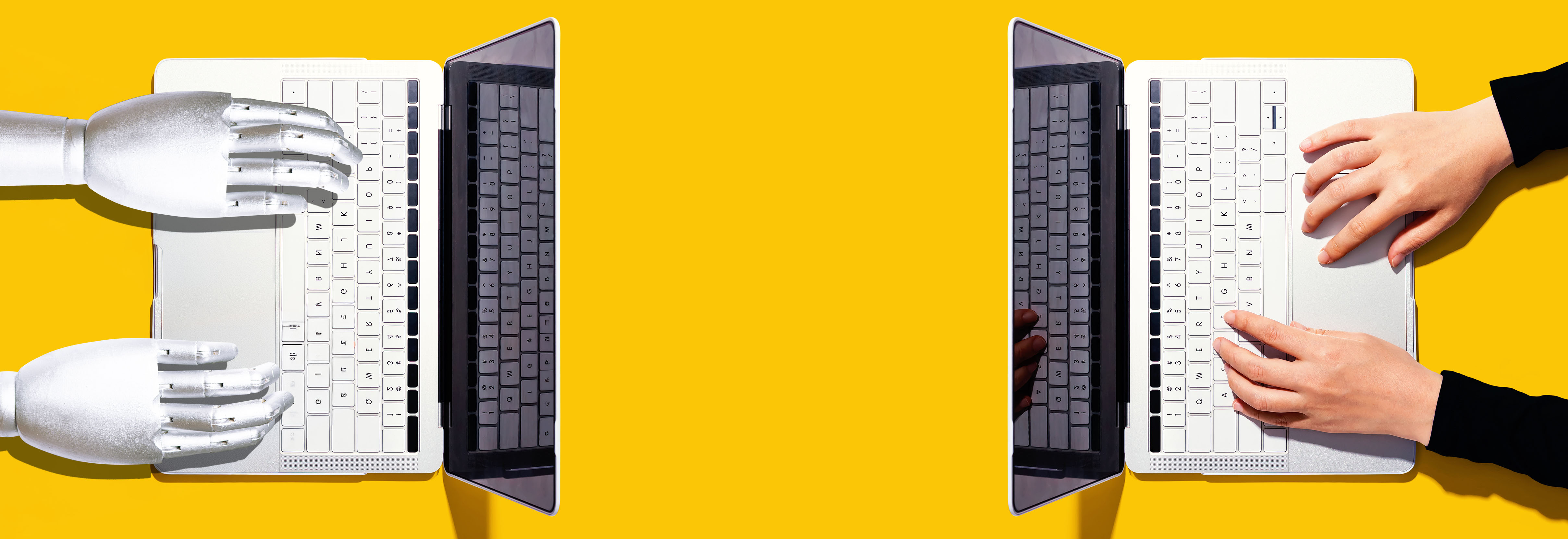
Technology and AI advancements are developing at an unprecedented speed. Powerful, smart technology is becoming more accessible and cheaper for everyone. While there are multiple debates and concerns about how this technology is impacting our society and how we live our lives, I want to focus on how the job market is being affected.
A fear becoming increasingly common is that technology and AI will eventually eliminate jobs and replace humans in the workforce.
The Positives
To start on a positive note, the Center of Humane Technology notes that these developments also “input into the system.” In this new way of life, roles such as influencers have emerged. This becomes a domino effect. These new technologies create demand for software that makes processes even more efficient.
Daniil Filipenco’s article on the subject also notes how technology has created new jobs that “require specialists with specific skills and responsibilities.” Roles, including social media managers, cybersecurity experts, and data analysts, emerged from the ever-changing digital space (Filipenco).
In a study of 80 years of the U.S. Census data by MIT economist David Autor, it was found that 60% of employees today are in roles that did not exist 80 years ago. There has also been an 85% increase in employment since 1940. (Filipenco)
The Negatives
As a designer, this development is worrisome. Many people who would once have worked with a designer to create a logo, poster, etc., now work directly with an AI tool. Granted, these designs are not always of the highest quality, but many people would rather go the free-and-easy route and leave out the human aspect behind the designs.
AI tools’ main goal in the work field is to automate numerous tasks, which will shift how jobs and workers operate. Unfortunately, “many routine jobs will be replaced, and this process is already happening” (Filipenco). It has been found that in the U.S., “there were around 1.17 million layoffs in 2025 (the highest figure since the 2020 pandemic), of which nearly 55,000 were directly linked to AI (4%)” (Filipenco).
That same study by David Autor that offered somewhat comforting data also included that, “between 1980 and 2018, automation eliminated twice as many occupations as it had done between 1940 and 1980. Although automation created jobs, there were fewer than the number eliminated due to automation” (Filipenco).
Is it a toxic relationship?
There is no clear answer one way or another. Filipenco’s article emphasized that automation does not mean elimination. Over the next few years, the tasks in people’s jobs will be reshaped, but it does not mean a total AI replacement. Workers need to educate themselves on these new tools to keep up with the shifting workflow. How jobs operate has been changing for centuries as we have progressed as a society; what is alarming now is the speed at which these developments are happening. It has become overwhelming, leaving people uncertain about their job security.

