“Phoebe, do you have a plan?” – Monica Geller
“I don’t even have a pla-.” – Phoebe Buffay– Friends, Season 1, Episode 4
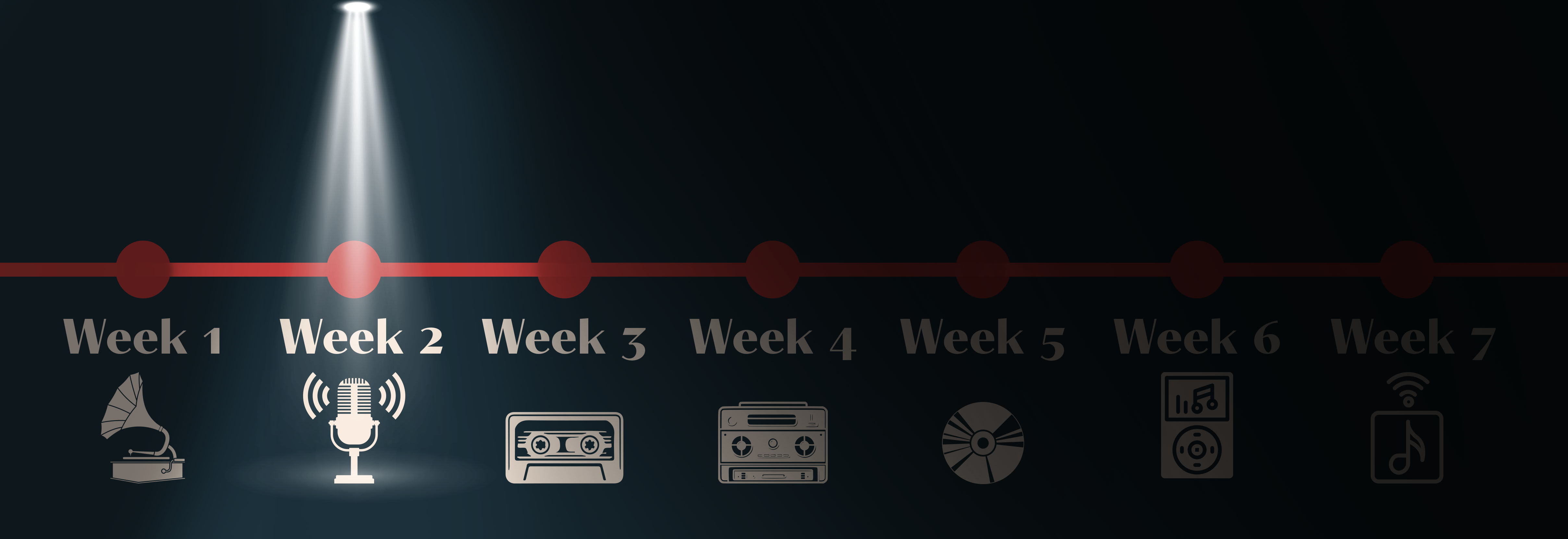
Unlike Phoebe Buffay, I do have a plan for my project, The Tracklist of Change: How We Listen to Music. This week, I focused on creating a project plan with a clear outline for the next few weeks of my project’s development. Within this plan, I organized action items for the small tasks that need to be completed in each phase. Taking this step before developing the content will help me stay on task and achieve all the goals I have set for myself and this project.
Importance of Planning
Erin Aldridge’s article on project management notes that projects fail when the “momentum outpaces structure and teams charge ahead without direction” (Aldridge). Project management is necessary because it prevents chaos, establishes purpose, and provides direction. Creating phases such as initiation, planning, and execution helps keep a project focused (Aldridge).
My System
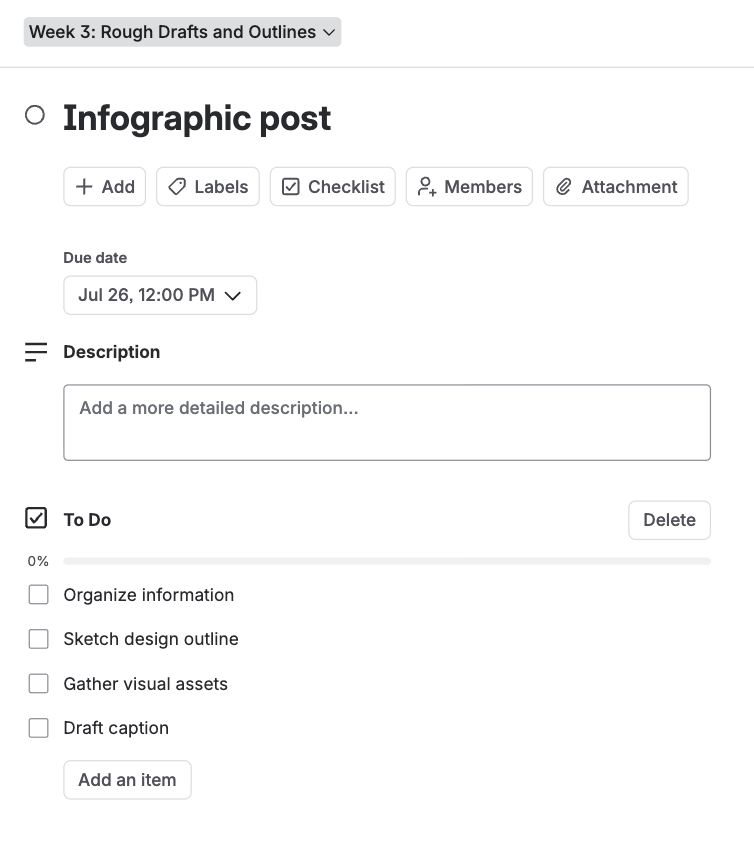
To organize and easily track my tasks, I have chosen to use the platform Trello. Trello allows users to create task lists and, within those lists, add action cards. These action cards can be opened in another window where the user can input a description or a customized to-do list. The setup of this platform makes a complicated project seem more manageable.
I use checklists every day to manage my time with school, work, and daily activities. Creating a to-do list helps me focus on what I need to accomplish to achieve either short-term or long-term goals.
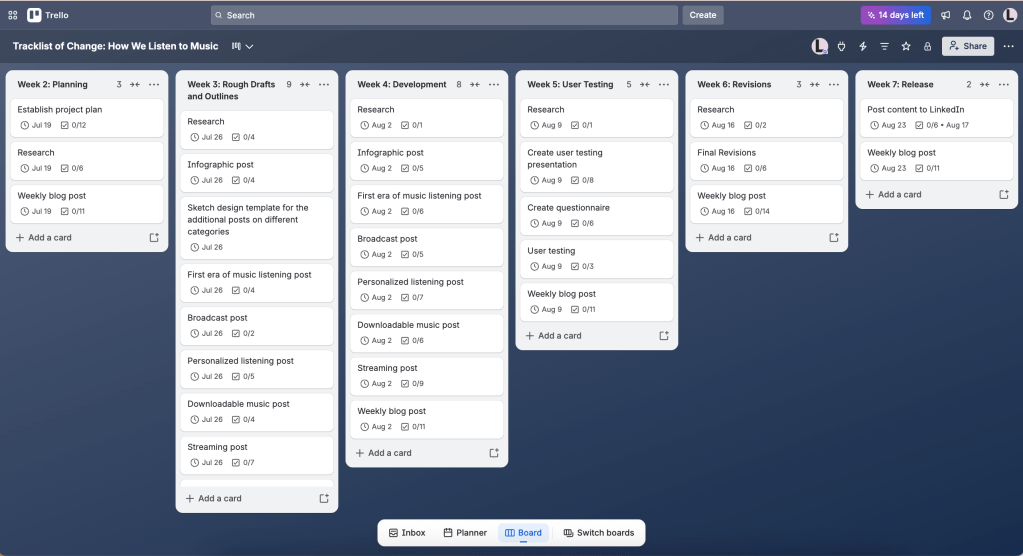
For my Trello board, I created a list for each phase of my project:
- Week 2: Planning
- Week 3: Rough Drafts and Outlines
- Week 4: Development
- Week 5: User Testing
- Week 6: Revisions
- Week 7: Release
Action Cards and Tasks
The action cards in each list vary based on the project phase and what needs to be done to move forward. Two actions that are consistent in my project plan are research and my weekly blog post. The research action consists of tasks: finding resources, taking notes, and annotating. As the phases progress, the research tasks focus on creating the final bibliography.
However, the blog post actions and tasks are the same across phases, serving as a checklist for my posts. Having consistent tasks will also ensure that all posts receive the same level of attention and are of equal quality.
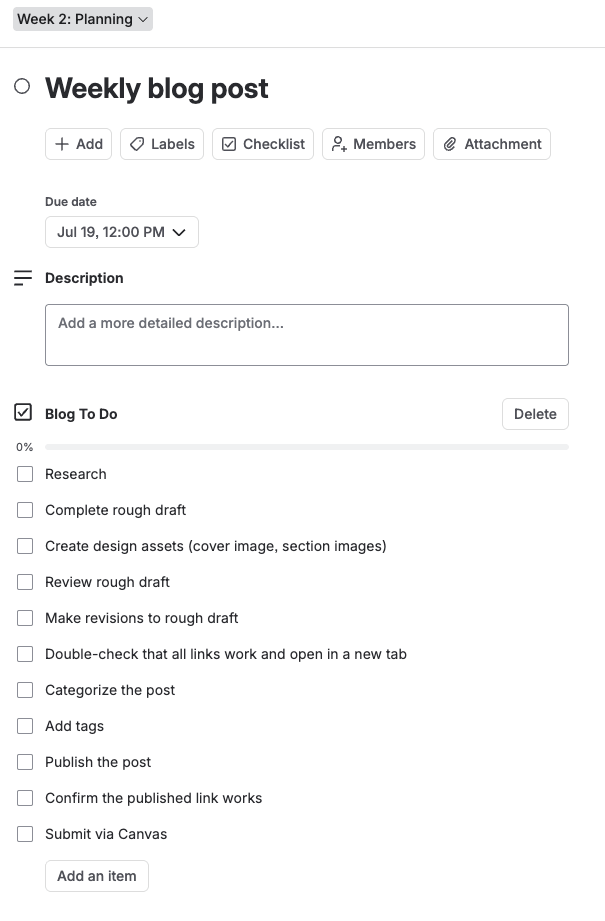
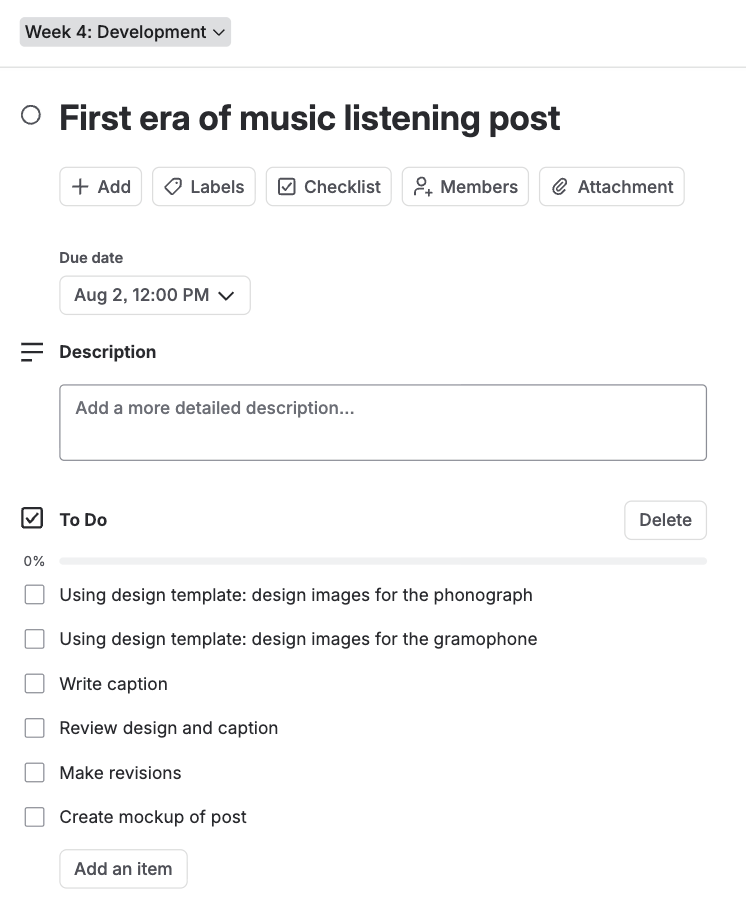
For both the Week 3 and Week 4 lists, I created an action card for each of the 6 individual posts included in the project. Within the action cards, I created a standard checklist of tasks to be completed.
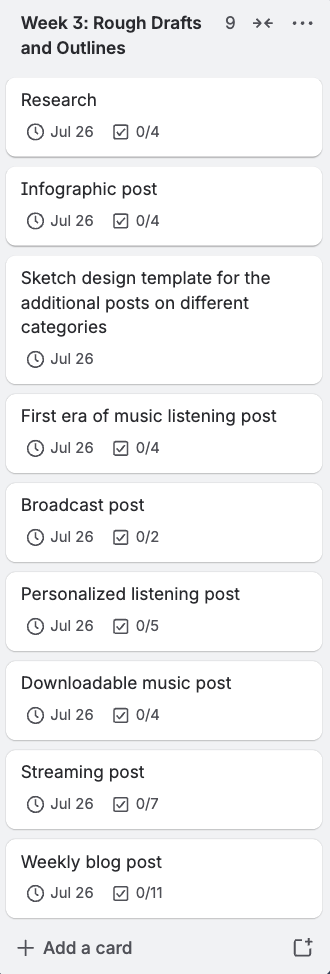
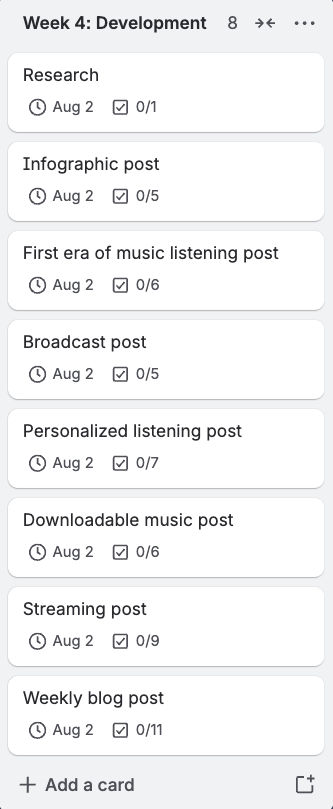
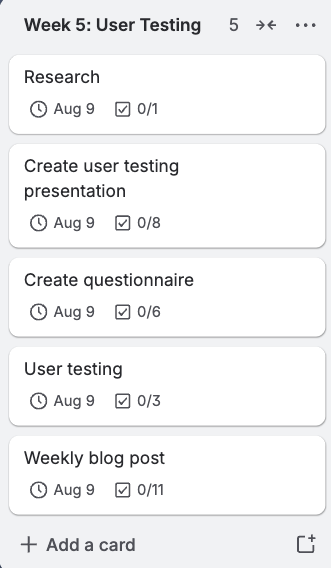
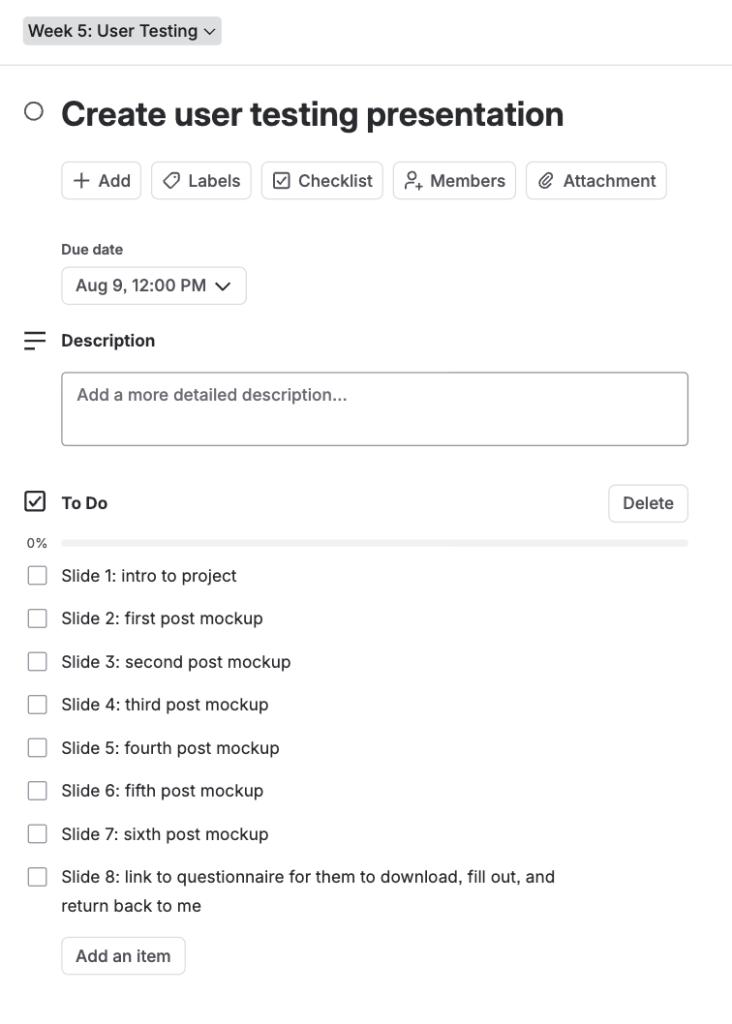
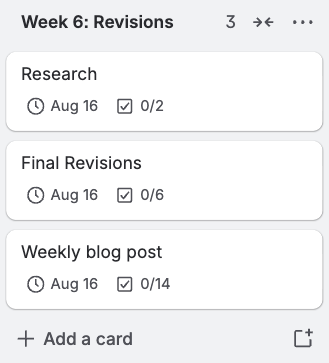
Weeks 5 and 6 of my project plan include user testing and revisions based on that feedback.
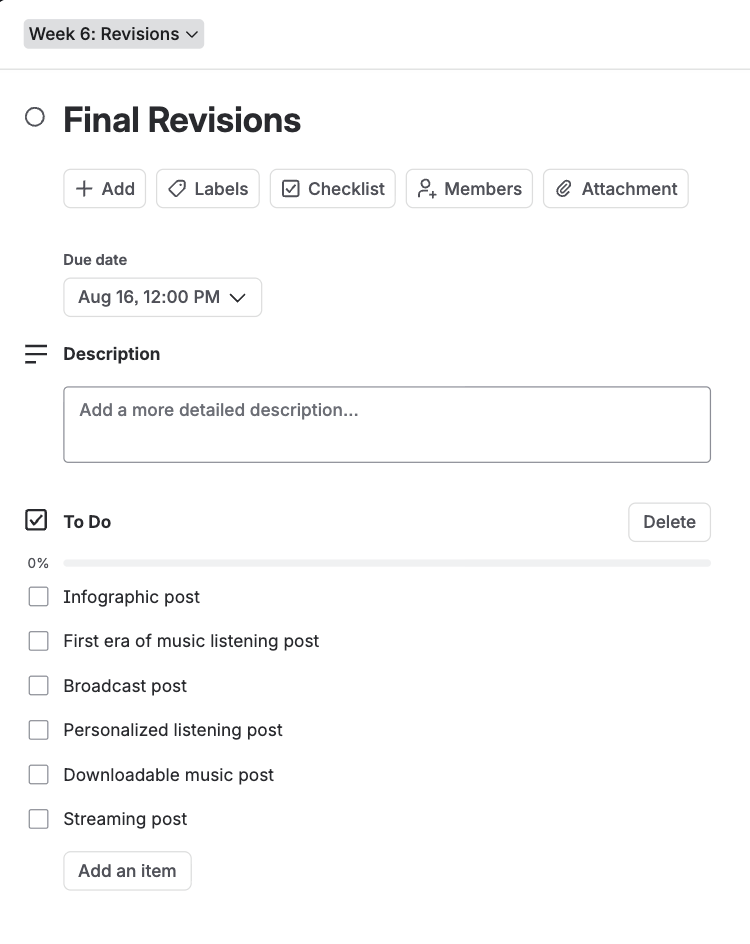
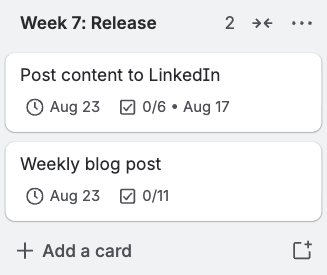
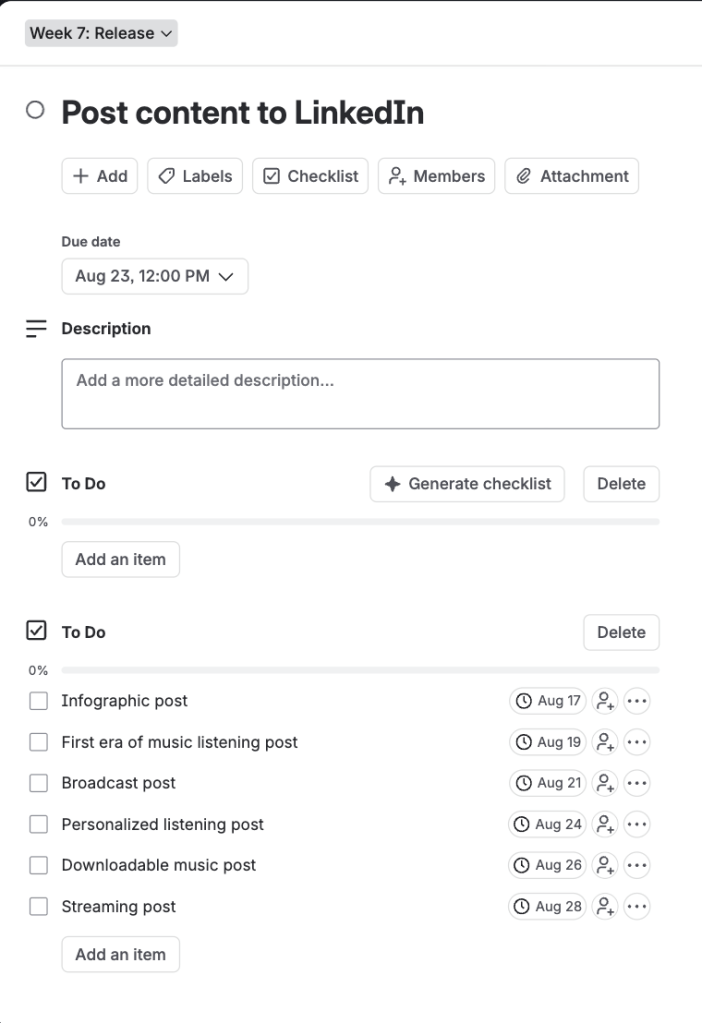
The final phase of my project, Week 7, is the release stage. For this list, I switched to putting all the posts under one action card, where I could attach the dates I plan to post the content on LinkedIn.