
The End of this Era
This week was the final week of my Tracklist of Change project. Over the past 7 weeks, I have researched, designed, written, revised, and learned more about a topic that has been a huge part of my life for as long as I can remember.
In this final phase of project development, I finalized all the creative and copy that make up this content series. In addition to putting the finishing touches on the content, I also created a final page on my portfolio to summarize my experience.
Since I documented my journey weekly on this blog, it was easy to focus on the task at hand and move on to the next phase. Constantly thinking about the work-project-life balance and how I was going to be able to manage it all.
Creating this final project page allowed me to go back to the beginning and reflect on each stage of the process.
The Final Product
With the revised graphics and copy from last week, I can now start posting my content to LinkedIn. Below are the final posts that will be uploaded 3 times a week for 2 weeks:
Infographic
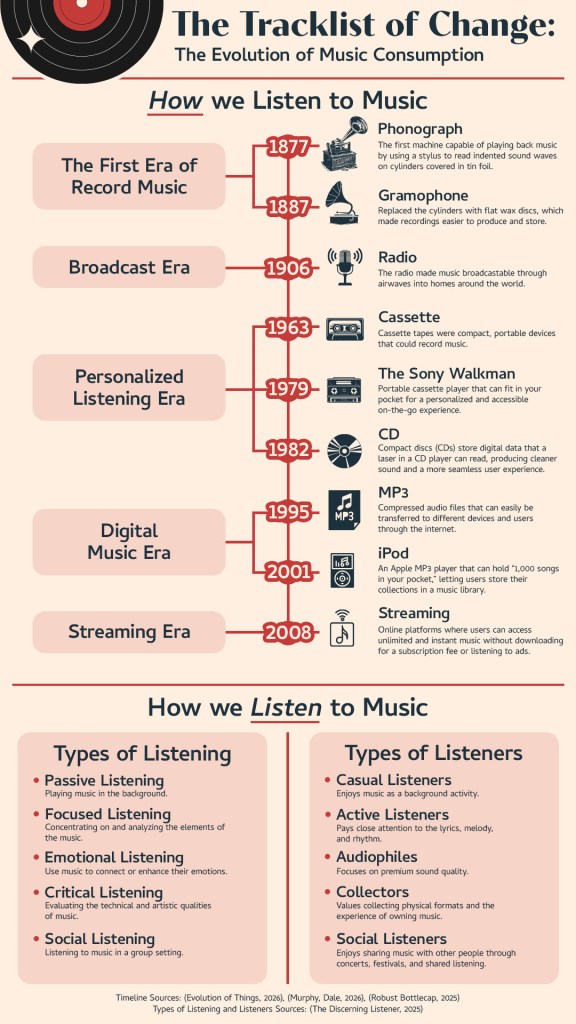
Caption:
Look around you right now and count how many devices can play music… There could be a phone, a computer, a TV, a radio, etc. There weren’t always this many options.
From the invention of the phonograph in 1877 to the AI DJs of 2026, how we consume music has changed drastically. How we listen to music has changed along with technology.
In my Tracklist of Change project, I explored how music consumption has evolved over the years and how listening habits have shifted.
Over the next few days, I will be breaking down each era of music history and its impact on society.
#music #musicconsumption #musicevolution
[Sources]
First Era of Recorded Music
Caption:
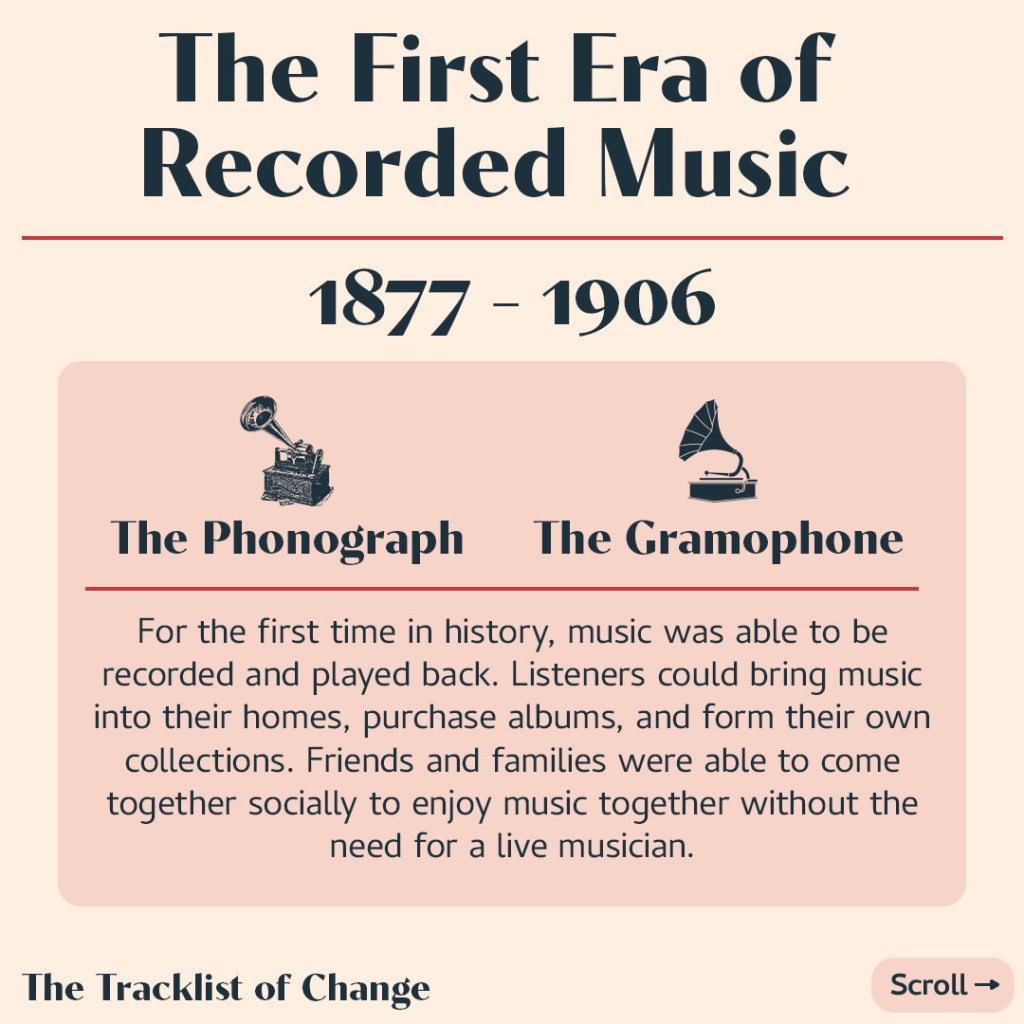
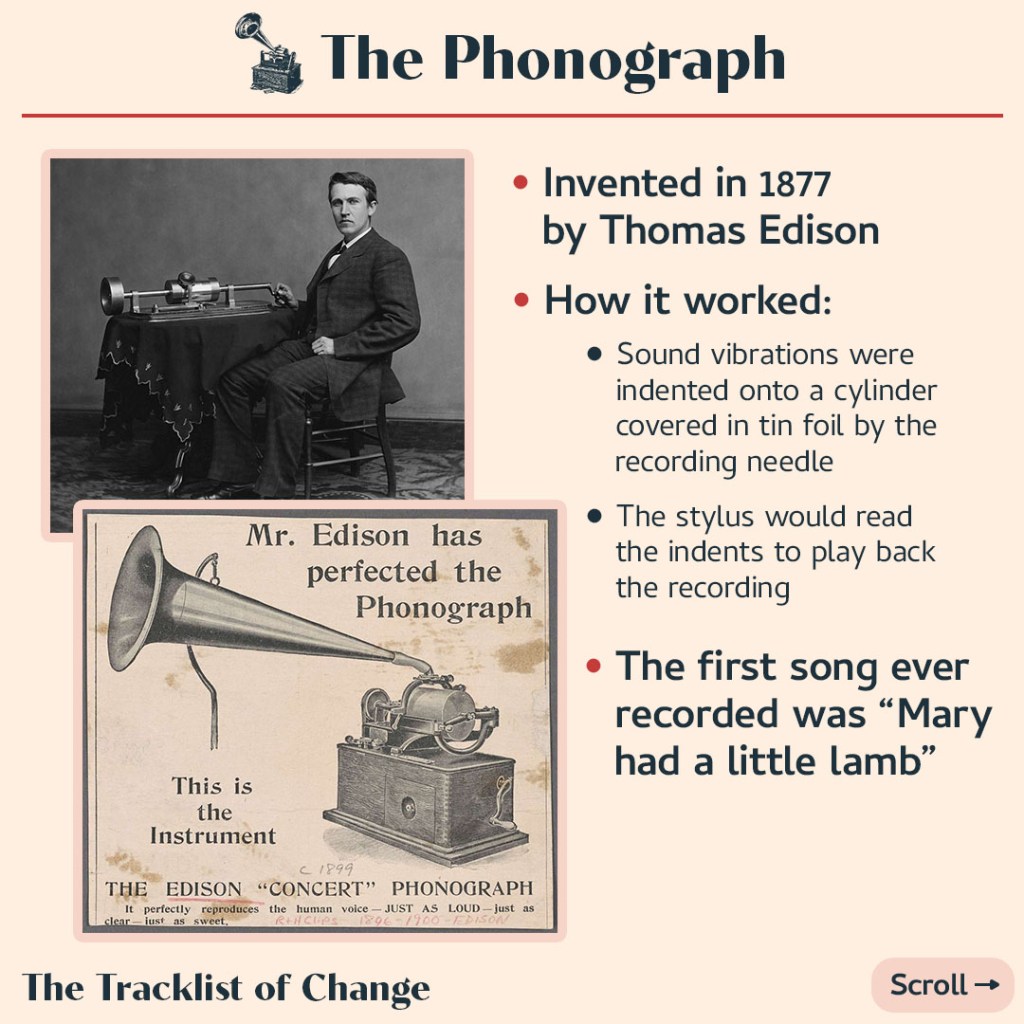
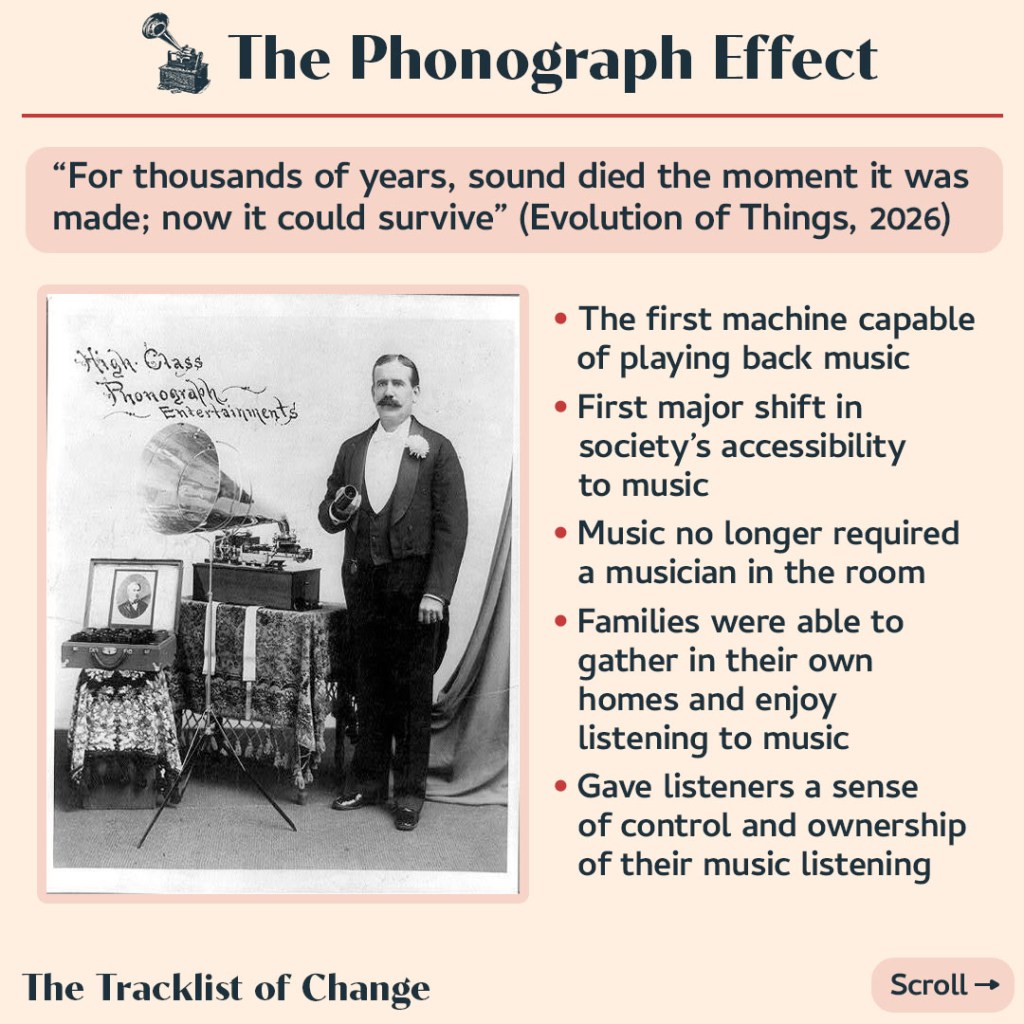
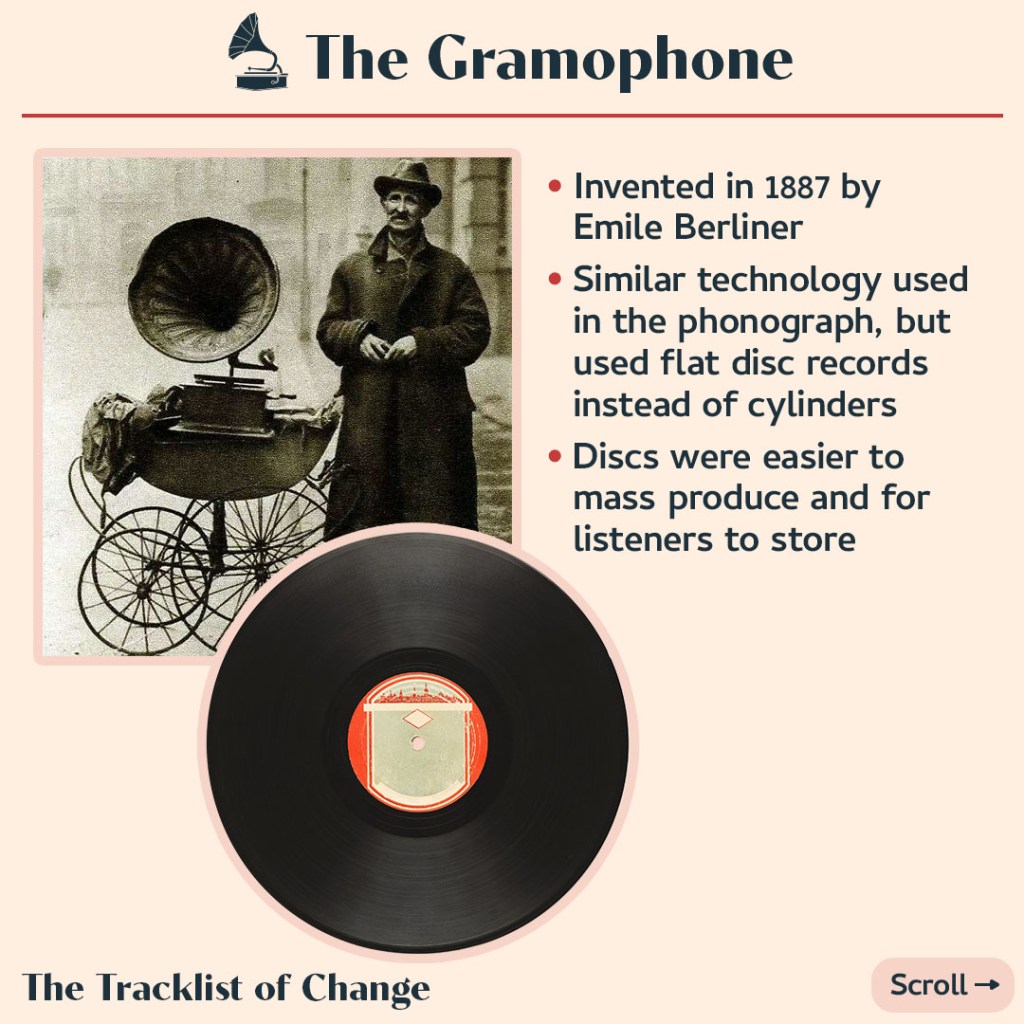
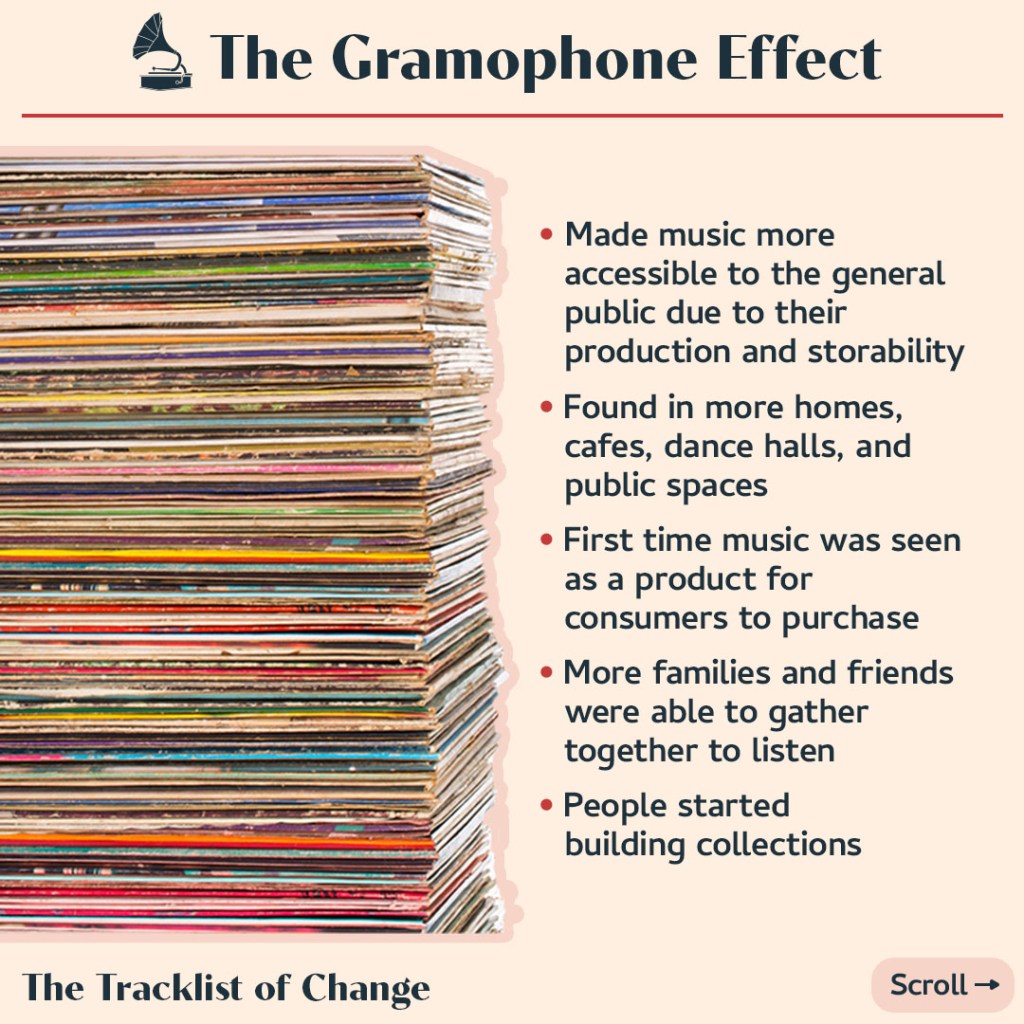
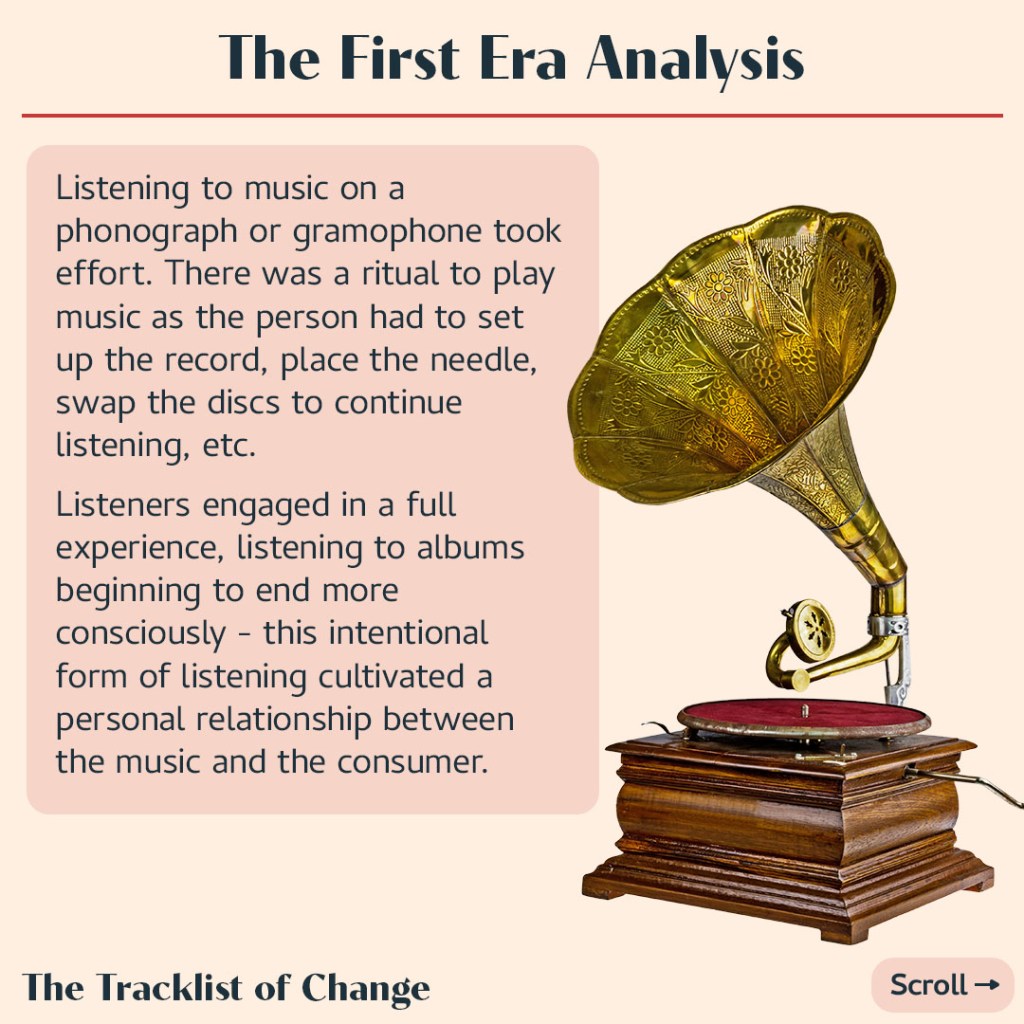
Before 1877, sound died the moment it was made. There was no way to replay music without a musician performing it again. That all changed in 1877, with the invention of the phonograph.
The first highlight in the Tracklist of Change project is the First Era of Recorded Music.
For the first time, listeners gained control over what they listened to, when they listened, and where they listened. The first era of recorded music caused a major shift that would change the world’s listening habits forever.
#music #musicconsumption #musicevolution
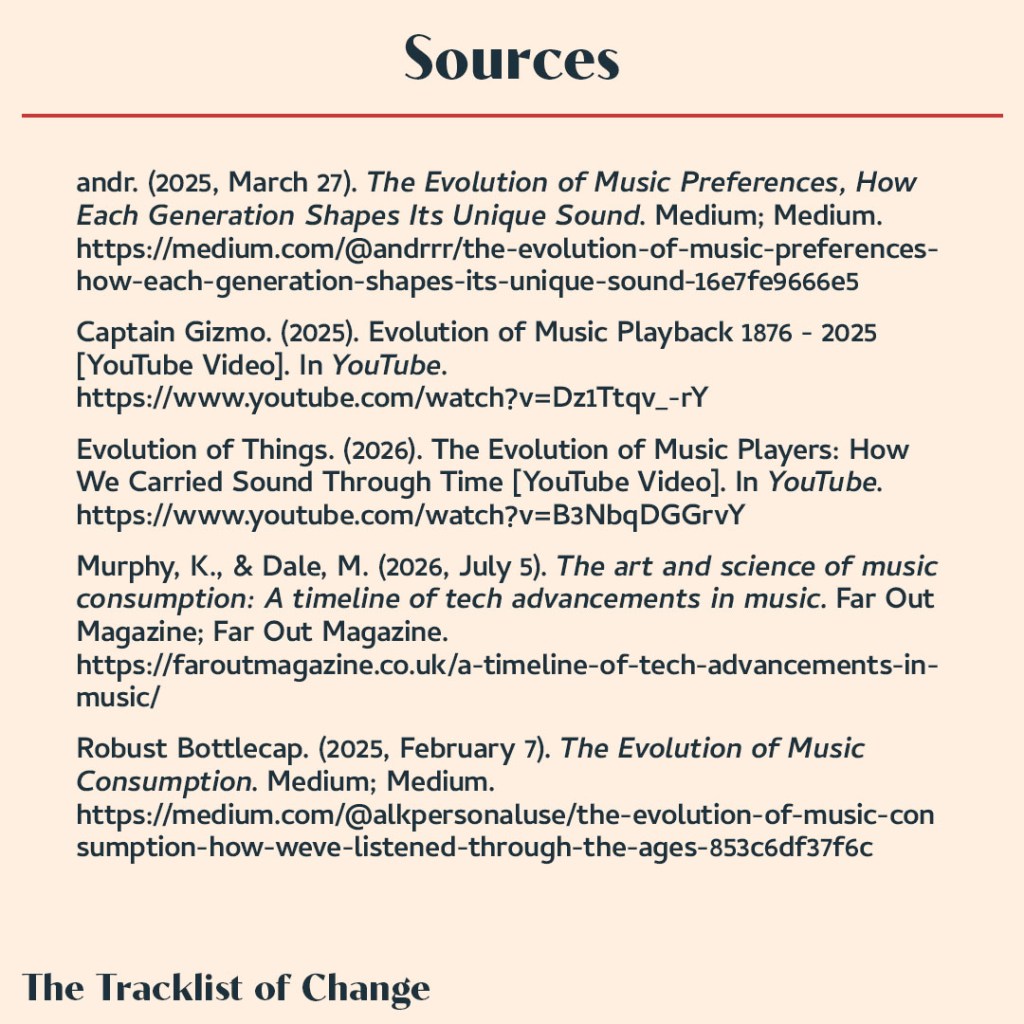
[Sources List]
Broadcast Era
Caption:
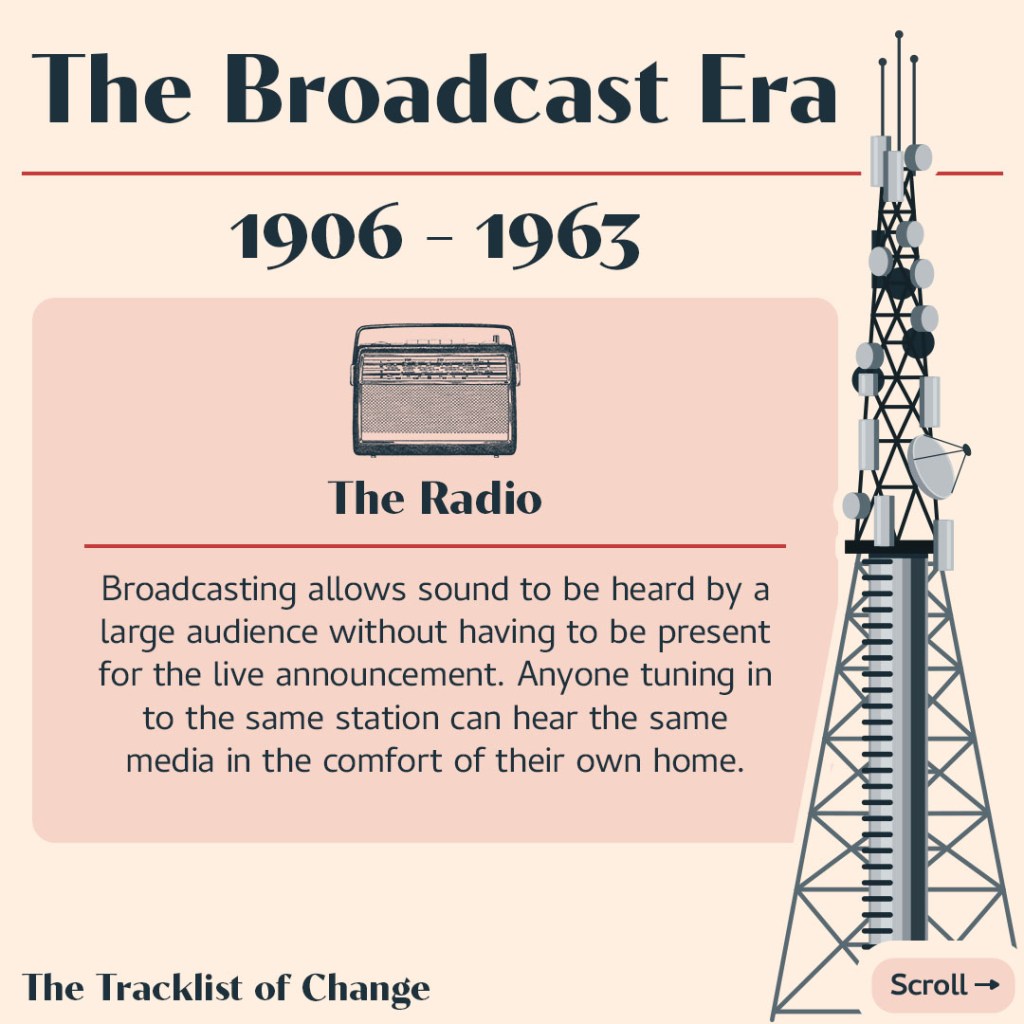
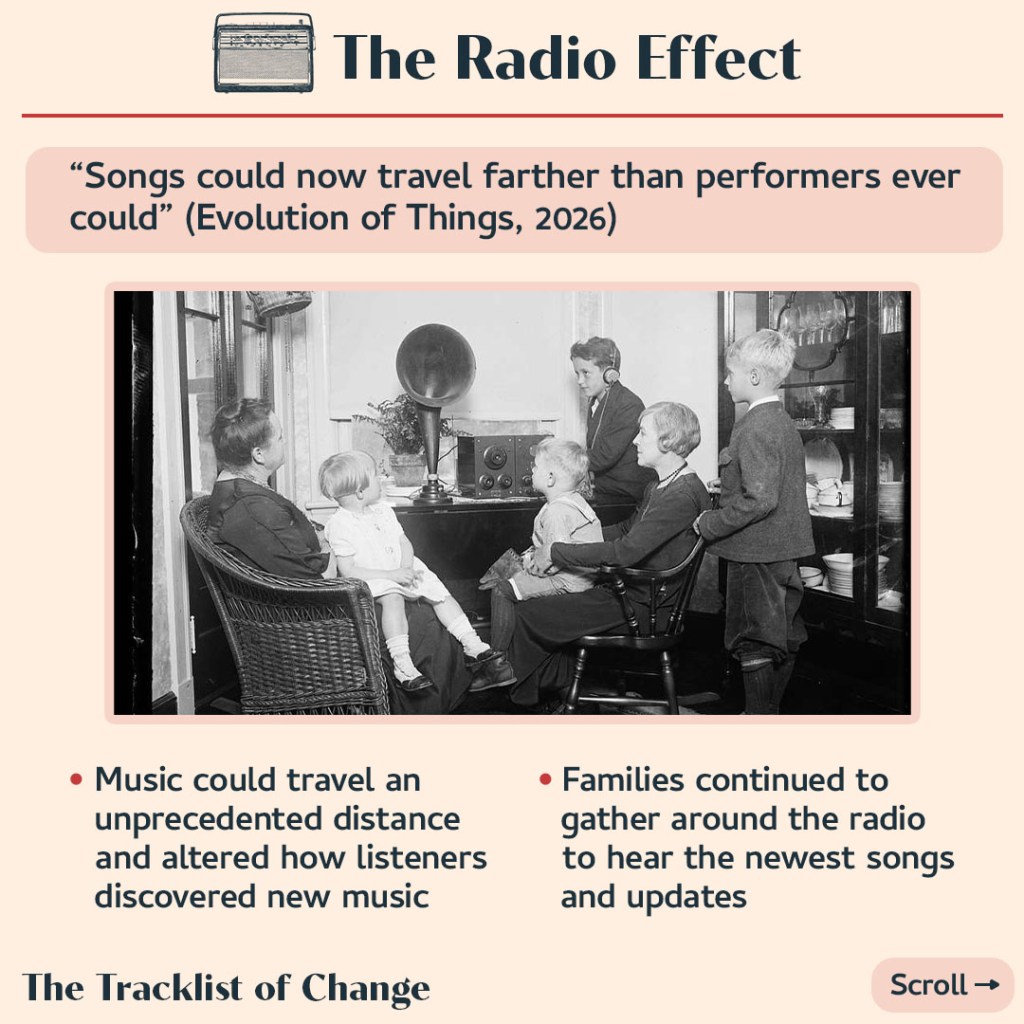
If you told someone in 1900 that they would soon be able to tune into a broadcast and engage in a shared experience from the comfort of their own home, they wouldn’t believe you.
The second highlight in the Tracklist of Change project is the Broadcast Era.
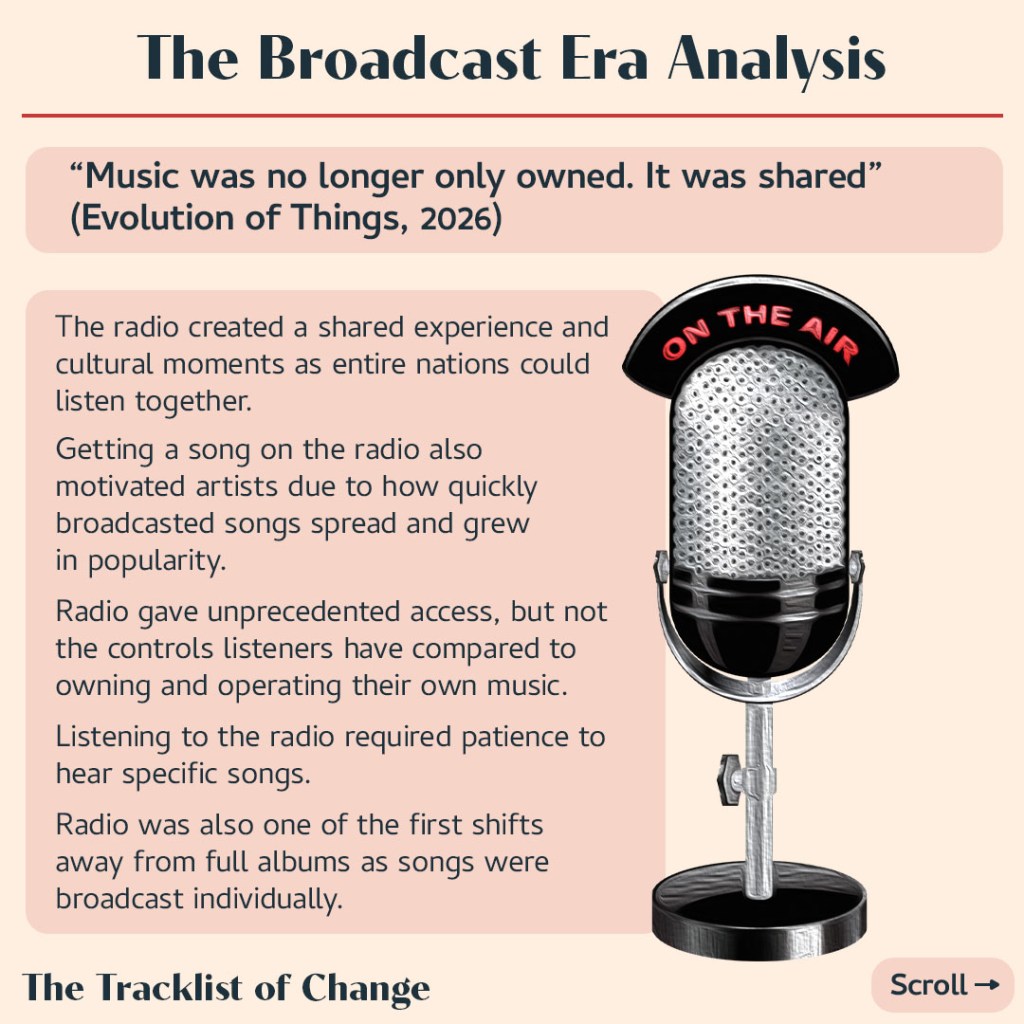
With the invention of the radio in 1906, families soon gathered around a machine that allowed them to hear music and news in real time. This era was an interesting combination of a shared and individual listening experience.
Unlike the First Era of Recorded Music with the phonograph and the gramophone, the focus was not on controlled music ownership, but on a listening experience guided by radio DJs.
#music #musicconsumption #musicevolution
[Sources List]

Personalized Listening Era
Caption:
If you told someone in 1900 that they would soon be able to tune into a broadcast and engage in a shared experience from the comfort of their own home, they wouldn’t believe you.
The second highlight in the Tracklist of Change project is the Broadcast Era.
With the invention of the radio in 1906, families soon gathered around a machine that allowed them to hear music and news in real time. This era was an interesting combination of a shared and individual listening experience.
Unlike the First Era of Recorded Music with the phonograph and the gramophone, the focus was not on controlled music ownership, but on a listening experience guided by radio DJs.
#music #musicconsumption #musicevolution
[Sources List]




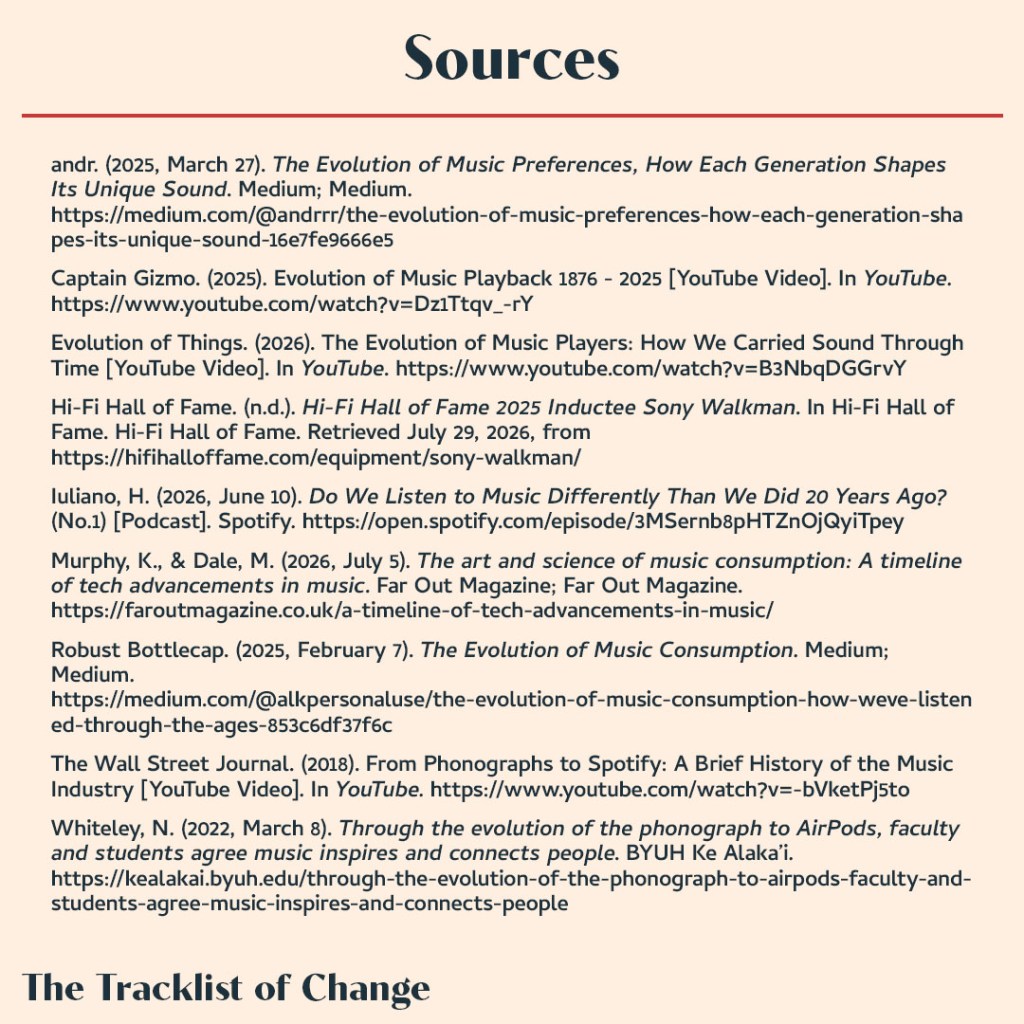
Digital Music Era
Caption:
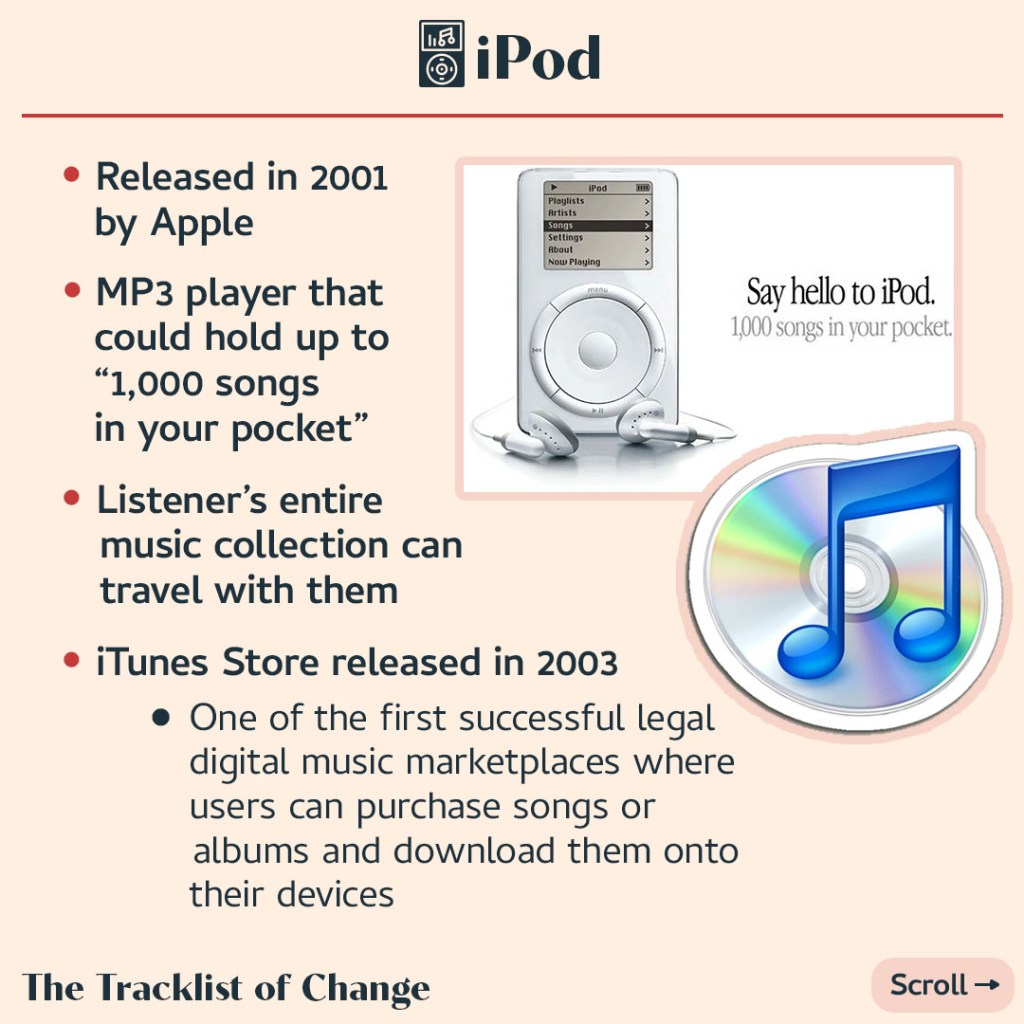
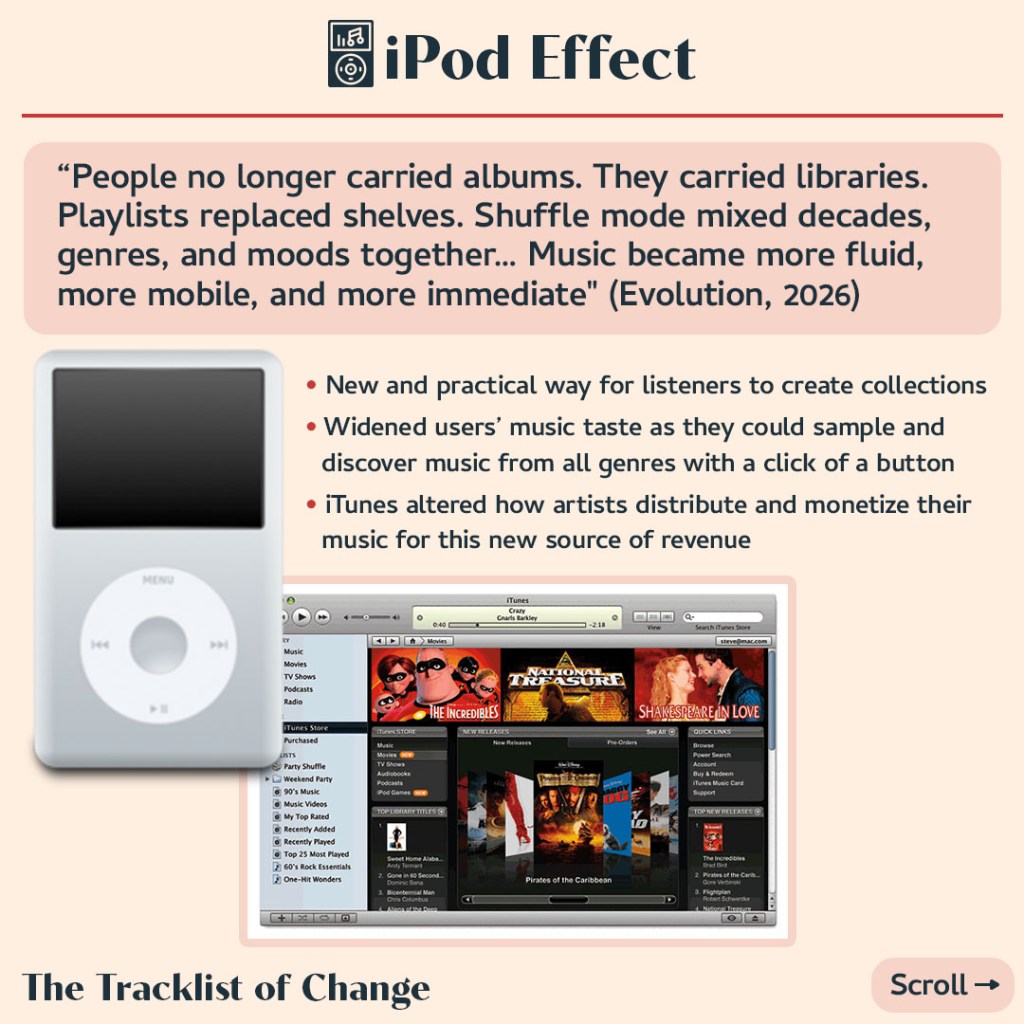
In 1995, all a listener needed was an internet connection and an MP3 player to download and play any song they wanted.
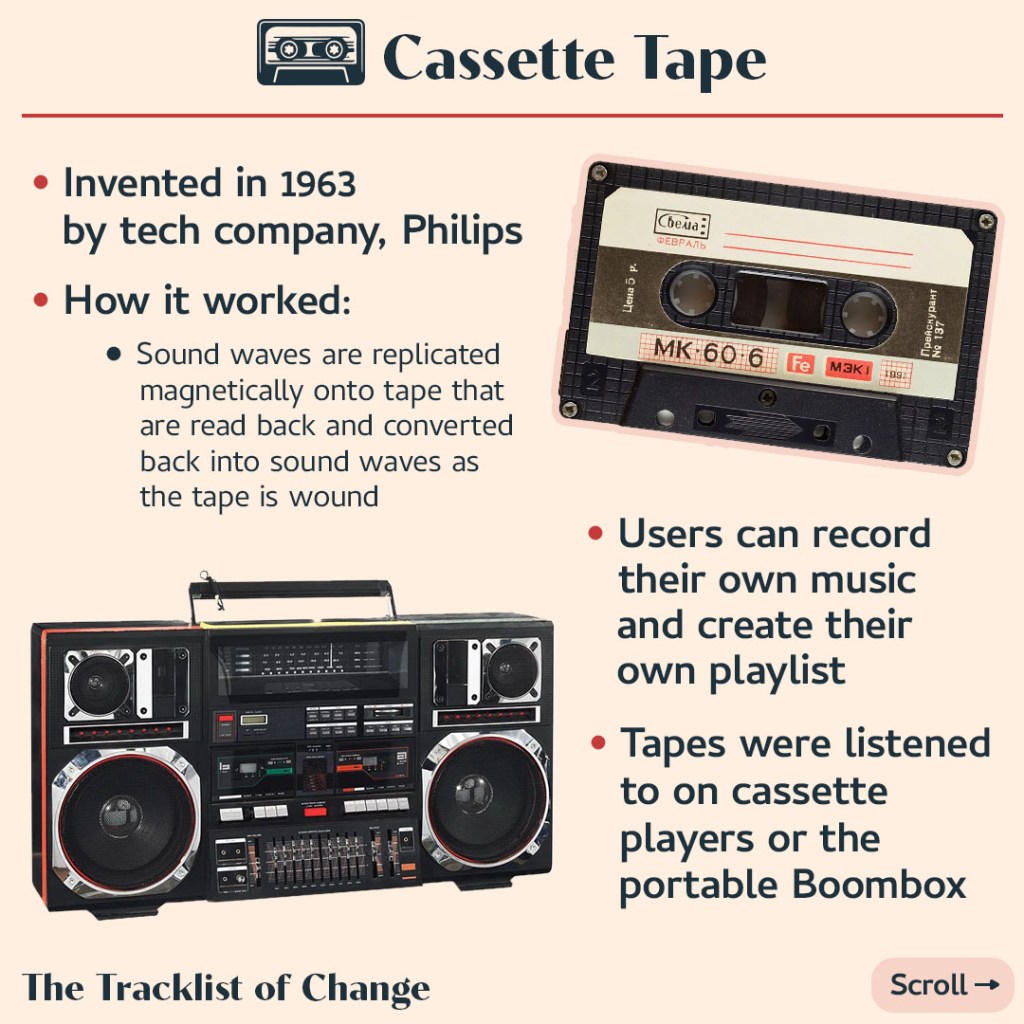
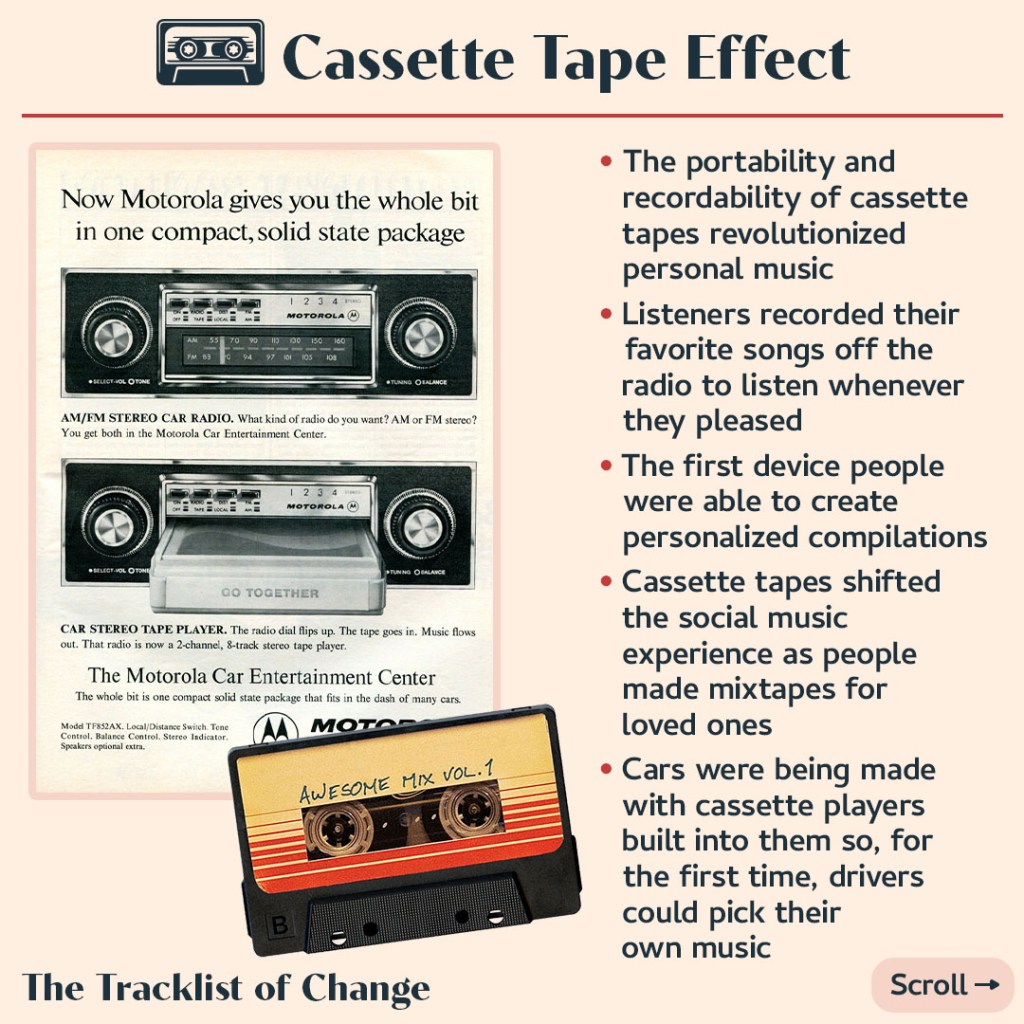
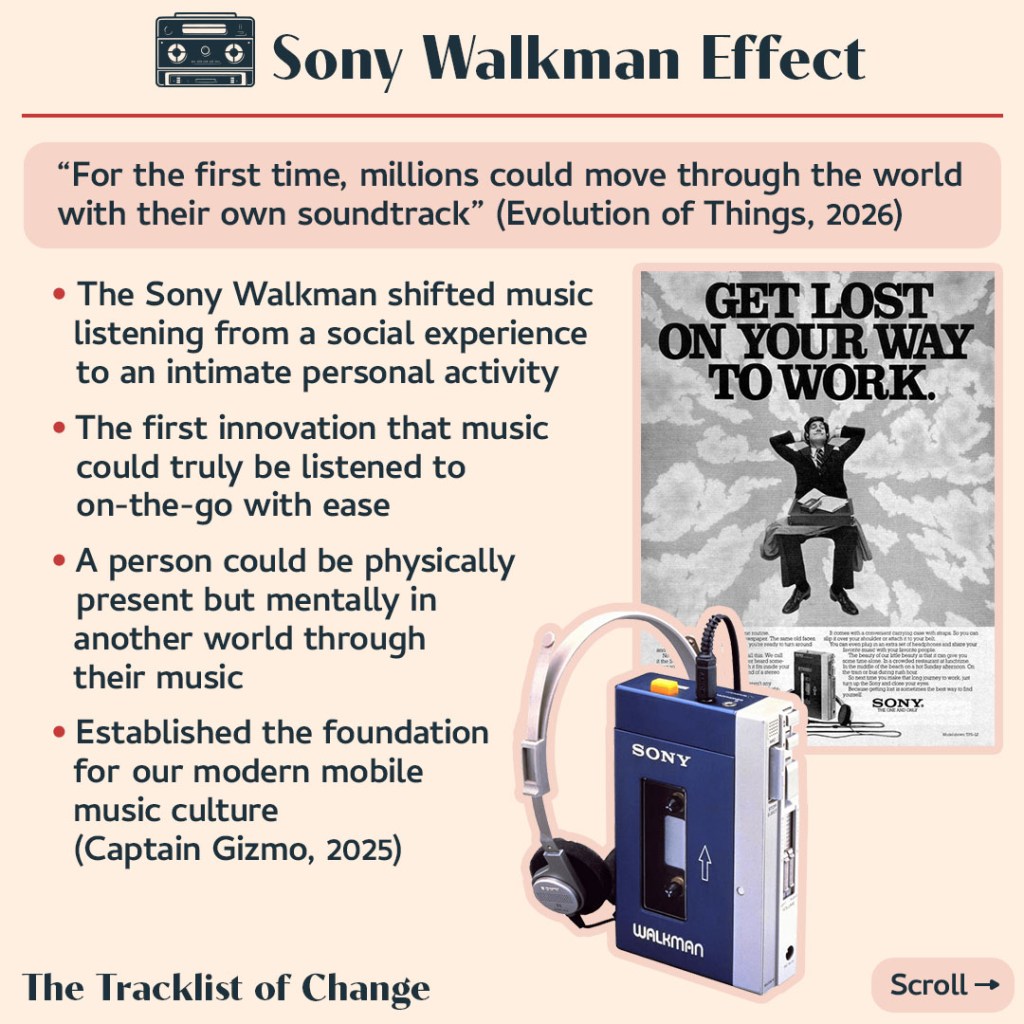
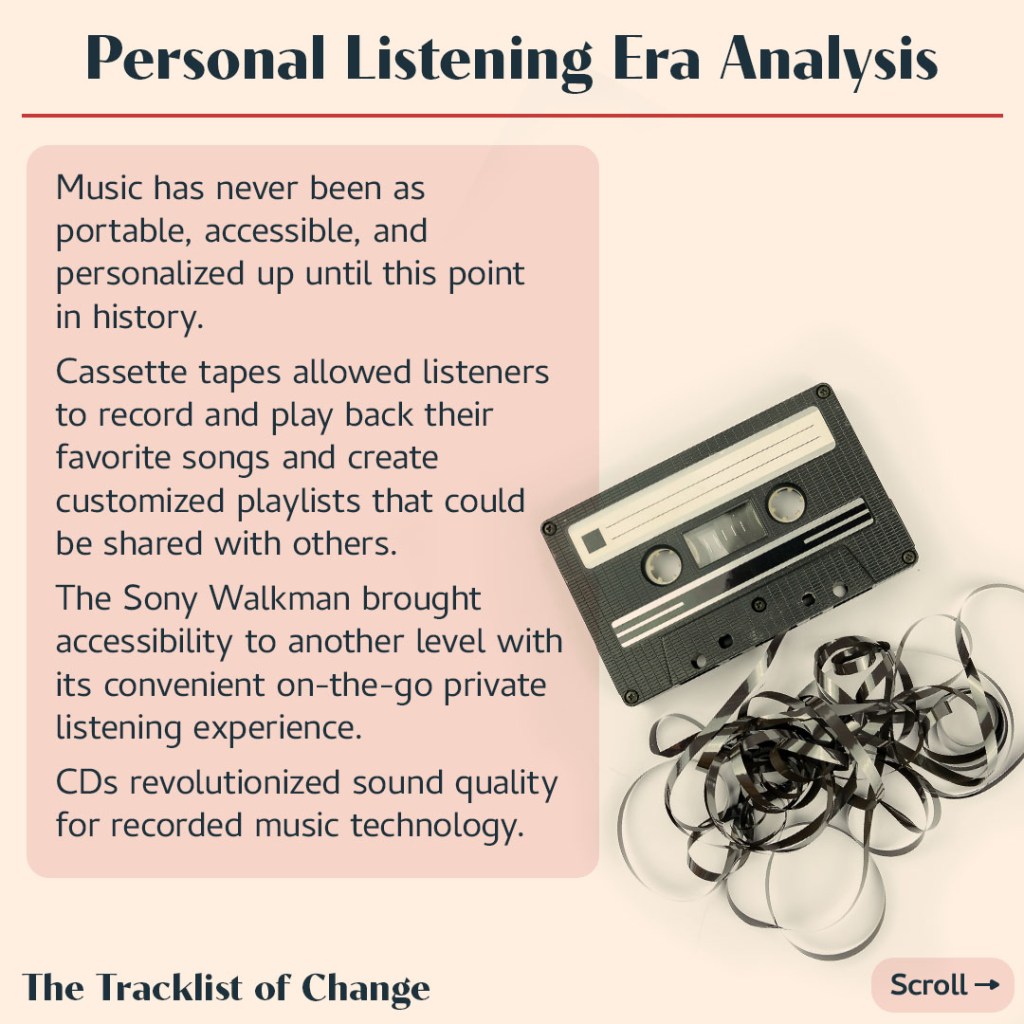
In the Personalized Listening Era of the Tracklist of Change project, we discussed how listeners took a major step toward feeling more control over their music listening with on-the-go devices and recordable tapes.
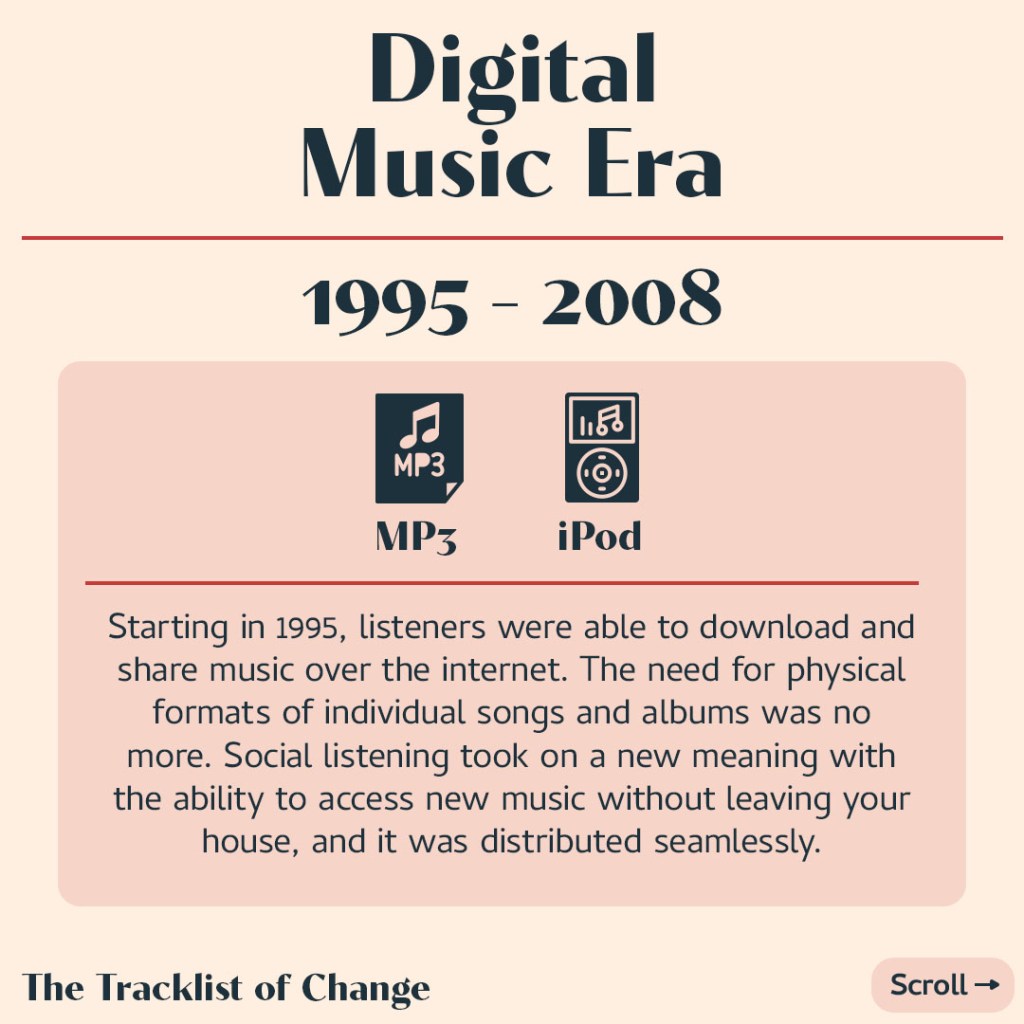
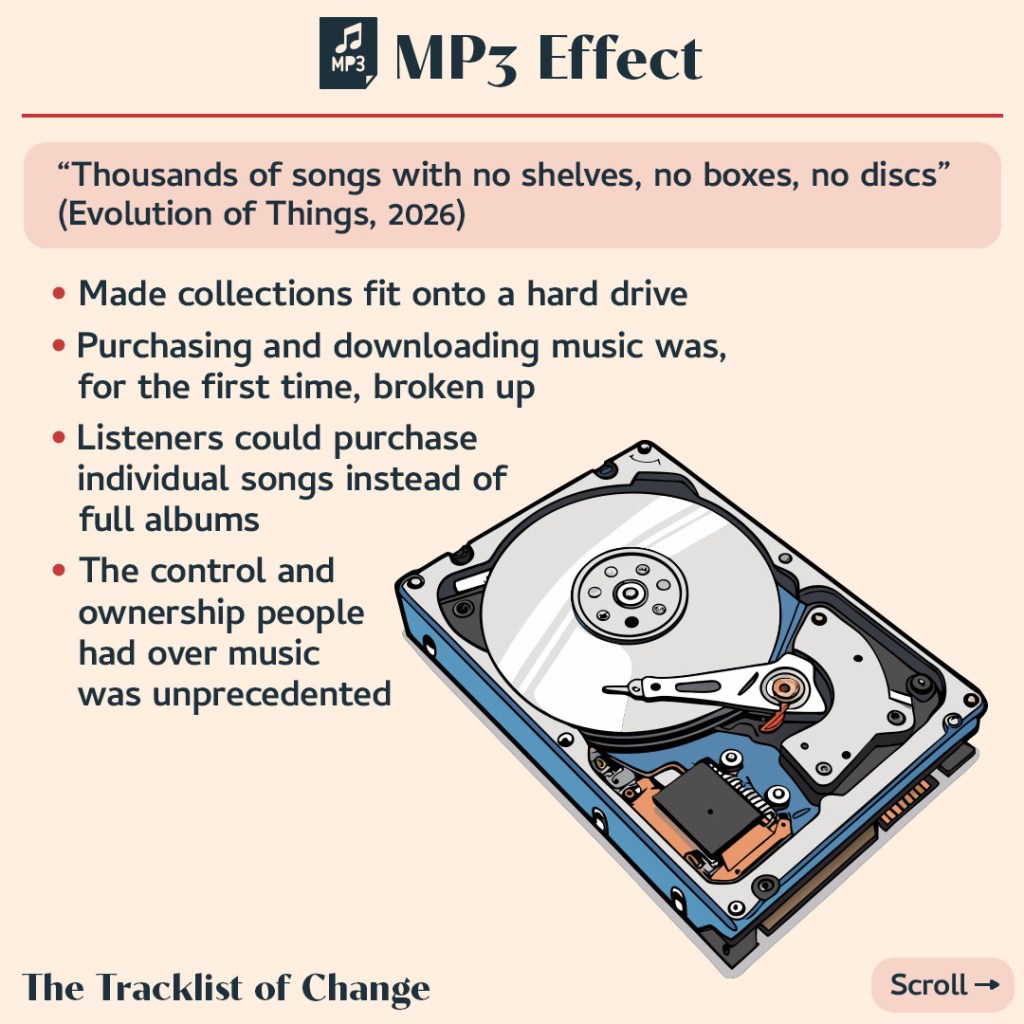
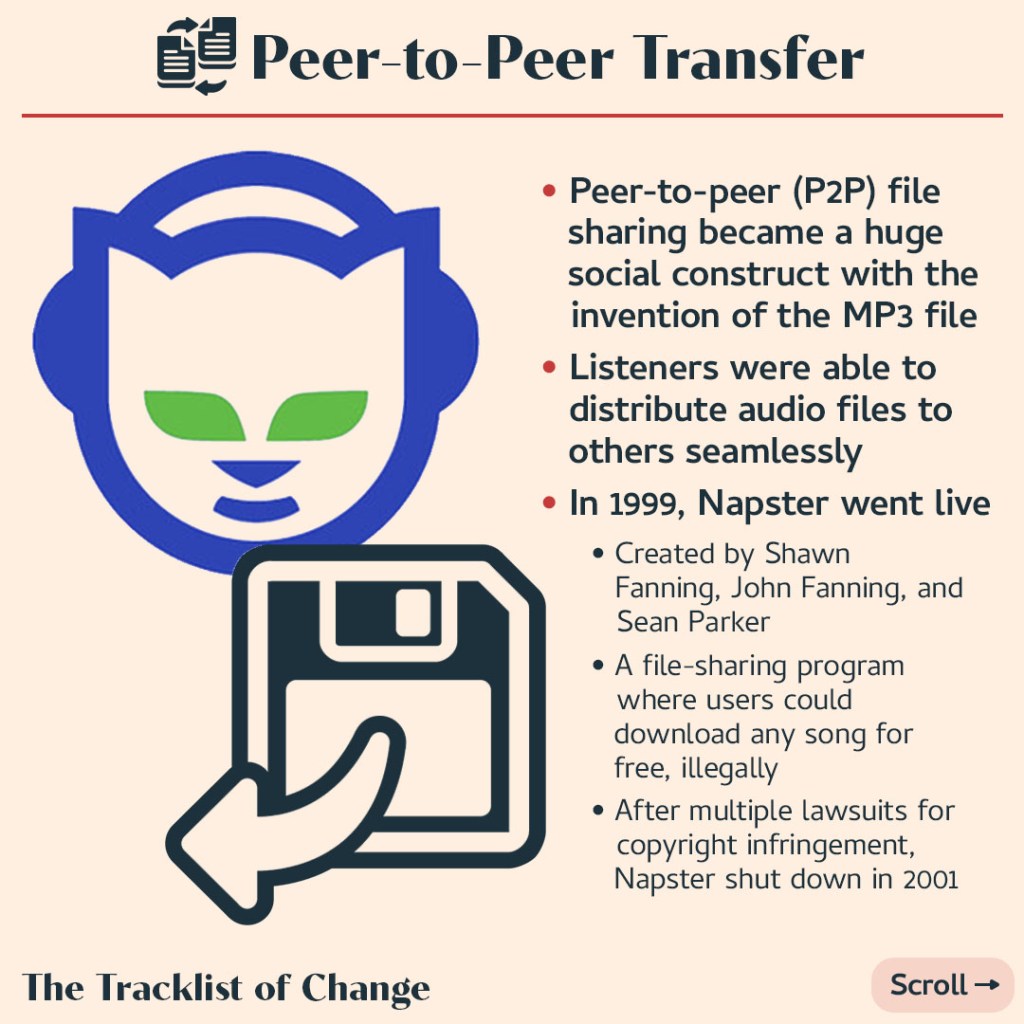
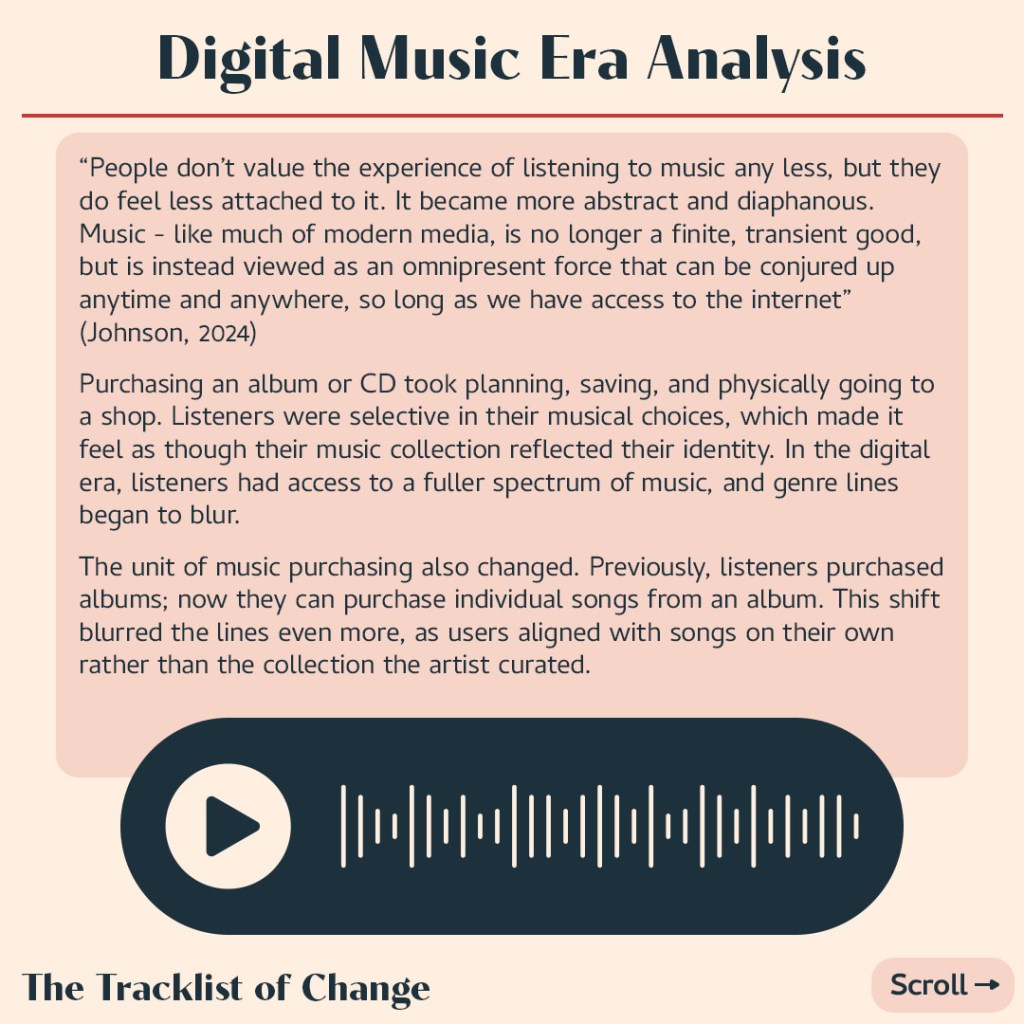
The Digital Music Era is the next step in music accessibility. The need for individual CDs and records was gone. Physical format collections took up space, which could leave less room to acquire more. Digital formats allowed users to download and distribute music easily, but not always legally.
#music #musicconsumption #musicevolution
[Sources List]



Streaming Era
Caption:
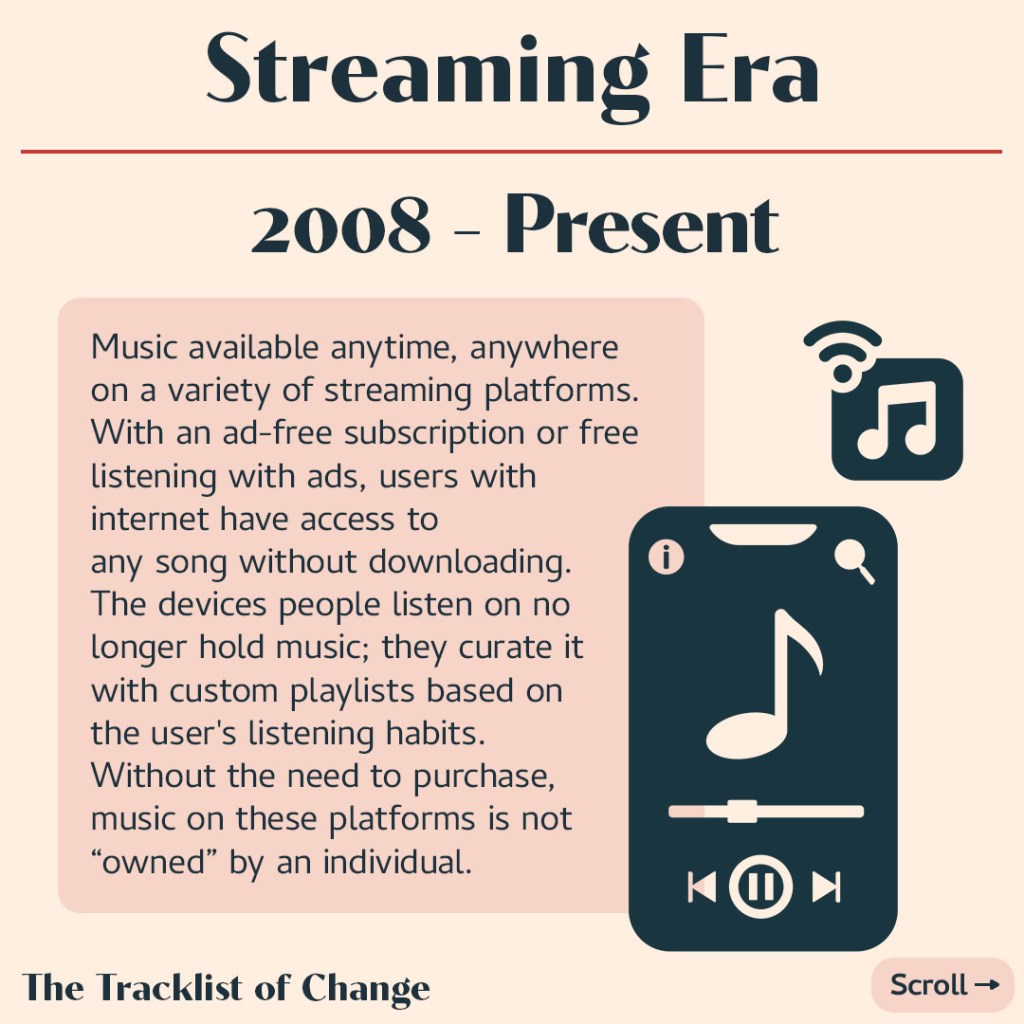
Any song, anytime, with just a click of a button.
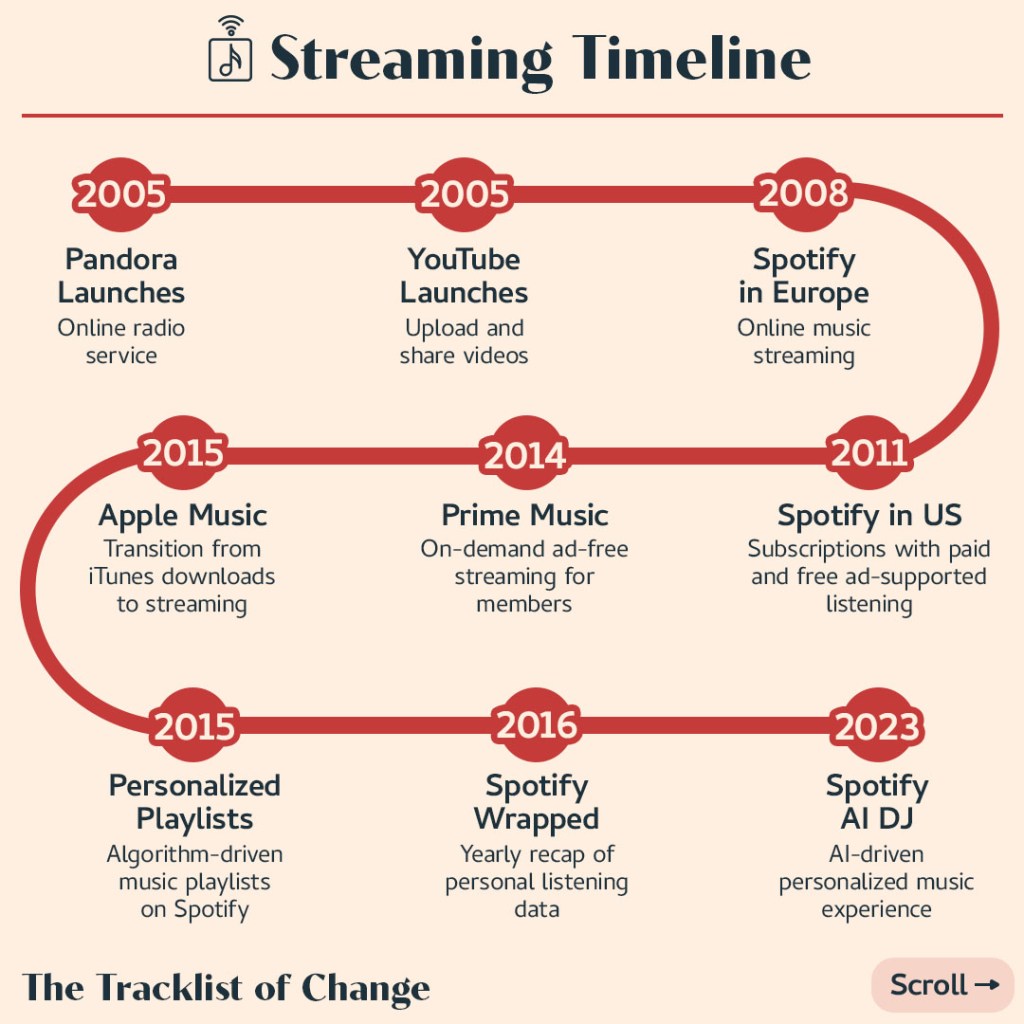
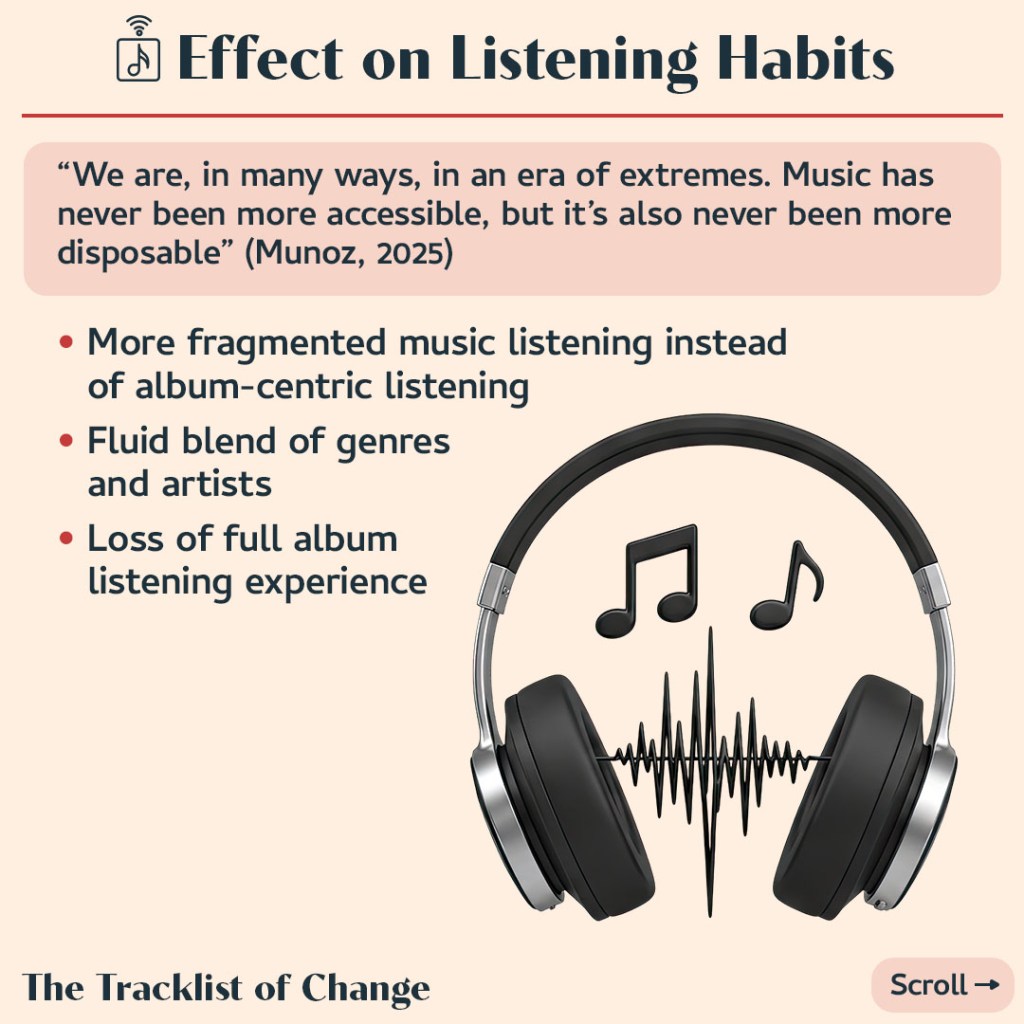
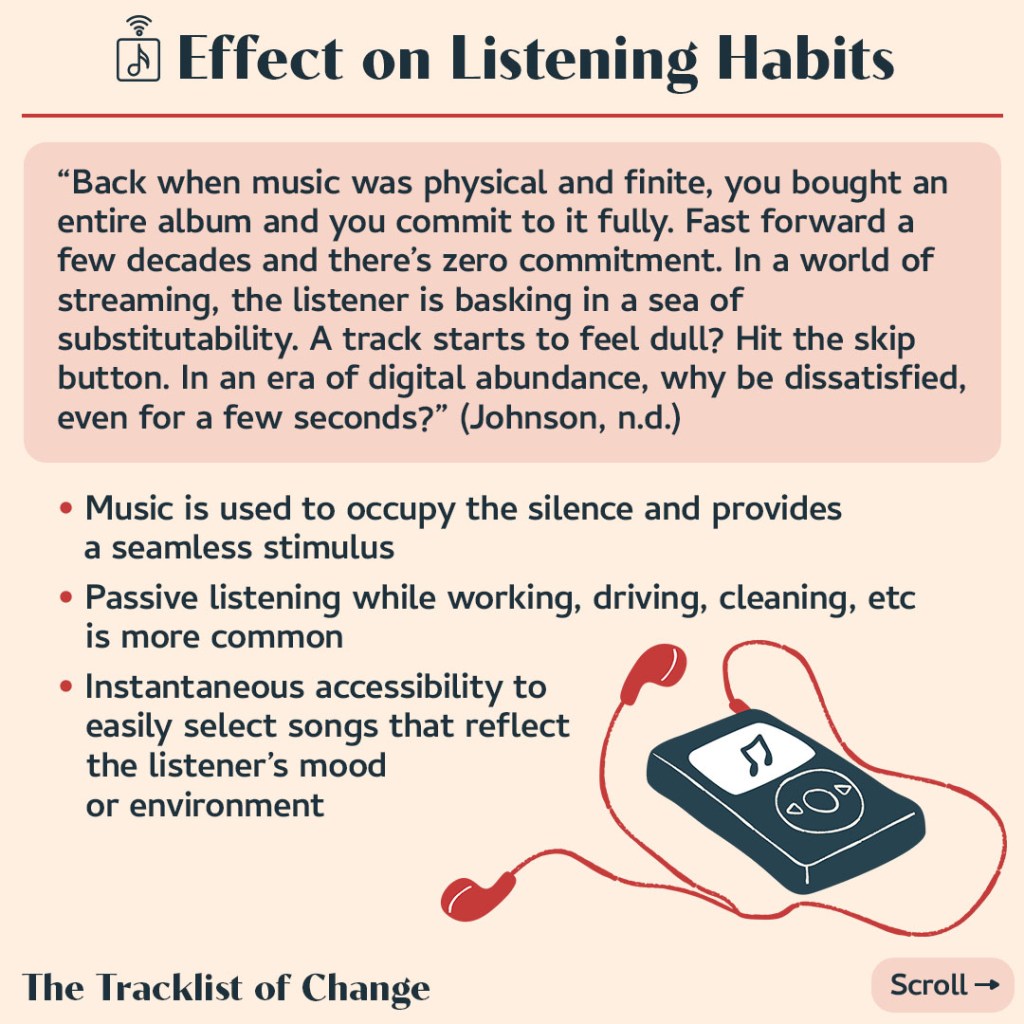
The final era of the Tracklist of Change project is the Streaming Era. Music is more accessible than ever. Streaming platforms make music available anytime, anywhere, for little to no cost. Flat subscription rates give listeners access to a vast music collection without having to download or purchase songs. Users can skip, repeat, and discover with ease.
AI DJs drive today’s music consumption with algorithm-inspired custom playlists. Listening to music is now becoming increasingly passive. With tracks and albums from every era available whenever, the relationship between music consumption and consumers has shifted into a new dynamic.
#music #musicconsumption #musicevolution
[Sources List]


The Bonus Track
After I hit the post button each time, the work isn’t over. I hope my content sparks interaction and opens a dialogue with the audience.
Anda Radulescu’s article on LinkedIn best practices notes that “if your company is only pushing out content without engaging in the dialogue around it, you’re treating LinkedIn like a bulletin board instead of the dynamic platform it is” (Radulescu, 2025).
By posting on LinkedIn, I have the opportunity not only to share my knowledge, but to connect with other people interested in the topic. I could potentially learn from them and spark more conversations.
Thank you
With that being said, I want to thank you for following along in my own evolution as I analyzed the evolution of music consumption. This has been a very beneficial and enjoyable learning experience. I hope you stick around for my next project.

