
“Pay attention to what users do, not what they say.” – Jakob Nielsen
Every designer is designing for an audience in some capacity. Each user will have their own goals when interacting with a product or interface. Designers, because they are human, are biased and can only see the world through their own eyes, which means what they believe is the best solution to a problem doesn’t mean it is correct for everyone else. Designers need to step outside themselves and focus on what users need. They do this by creating personas. (Goltz, 2014).
A persona is a fictional character created from research on a group of potential users. Through interviews, research, and user testing, designers identify patterns, group users into categories, and develop a persona to represent those larger groups.
“Personas provide meaningful archetypes which you can use to assess your design development against. Constructing personas will help you ask the right questions and answer those questions in line with the users you are designing for” (Dam, Teo, 2025).
Instead of focusing on thousands of individual users and their needs, a single persona representing the group lets the designer focus on more manageable, memorable characters. By developing a single user to focus on, the designer builds more empathy, the team aligns on goals, and it becomes easier to measure effectiveness. A designer can easily refer back to a persona and say, “Kelly would never do that.” (Goltz, 2014).
To practice this design thinking process, I created personas for potential users of the Crayola website, guided by the persona template provided by Ben Le Ralph.
The Crayola brand’s mission is to “spark creative moments.” Their website offers everything a user needs to tap into their crafty side. Crayola’s target audience includes parents, teachers, and anyone interested in art. On the site, a user can purchase a variety of supplies, get craft inspiration, view tutorials, and more.
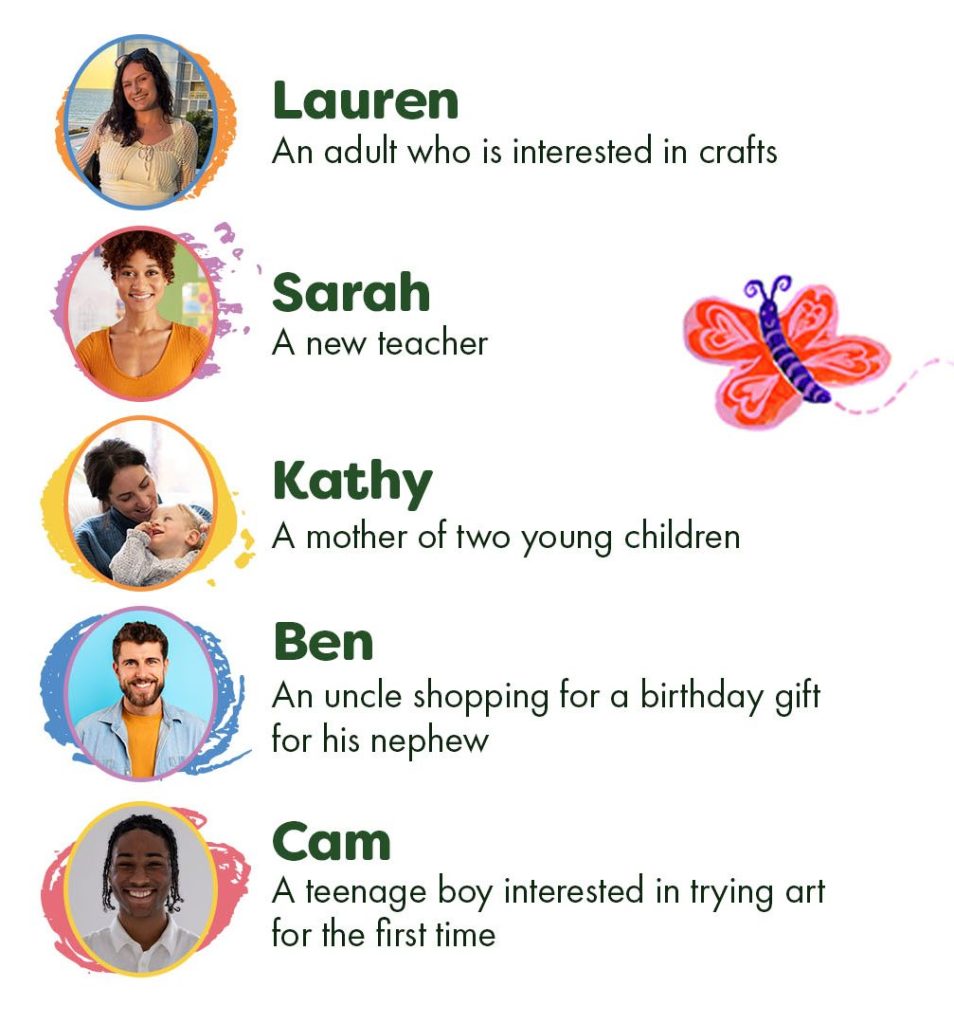
To understand the motives and goals of a potential Crayola user, I created five categories of consumers. Then, I created comprehensive personas for the first two users: Lauren and Sarah.
First Impressions
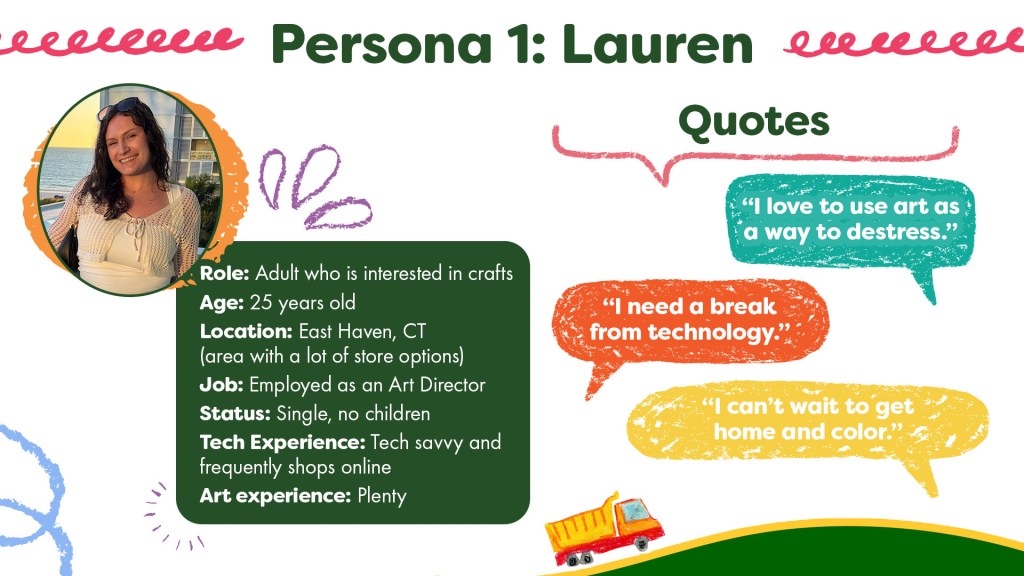
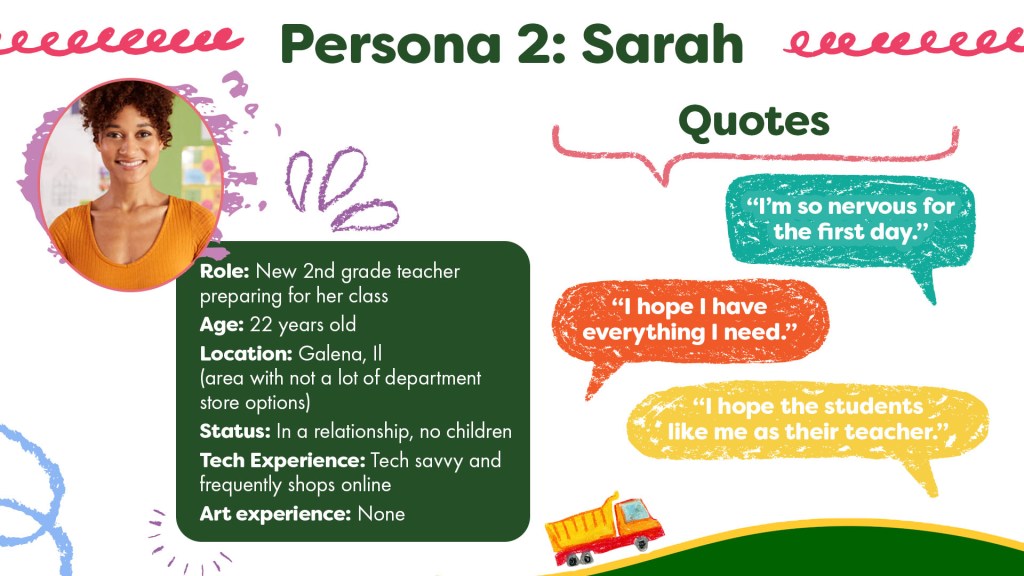
In the first impressions section of creating a persona, this is where you give your character a name, a portrait, state their role, which makes them a unique user group to focus on, quotes that give an insight into the character’s feelings and personality, and a list of demographics that are relevant to your project. (Ralph, 2017).
Here we have Lauren: a 25-year-old who is interested in crafts and lives in East Haven, CT, near many store options. She works as an art director and has technology and art experience.
For Sarah: we learn that she is a 22-year-old new 2nd-grade teacher from Galena, Illinois, a small town with few department store options. She is technologically savvy and has no art experience.
Motivation and Behavior
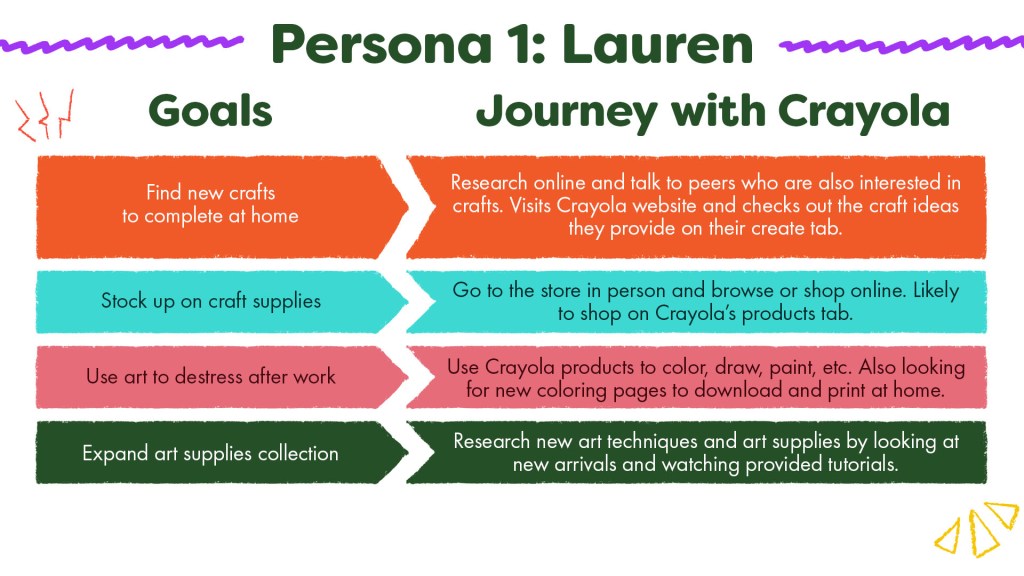
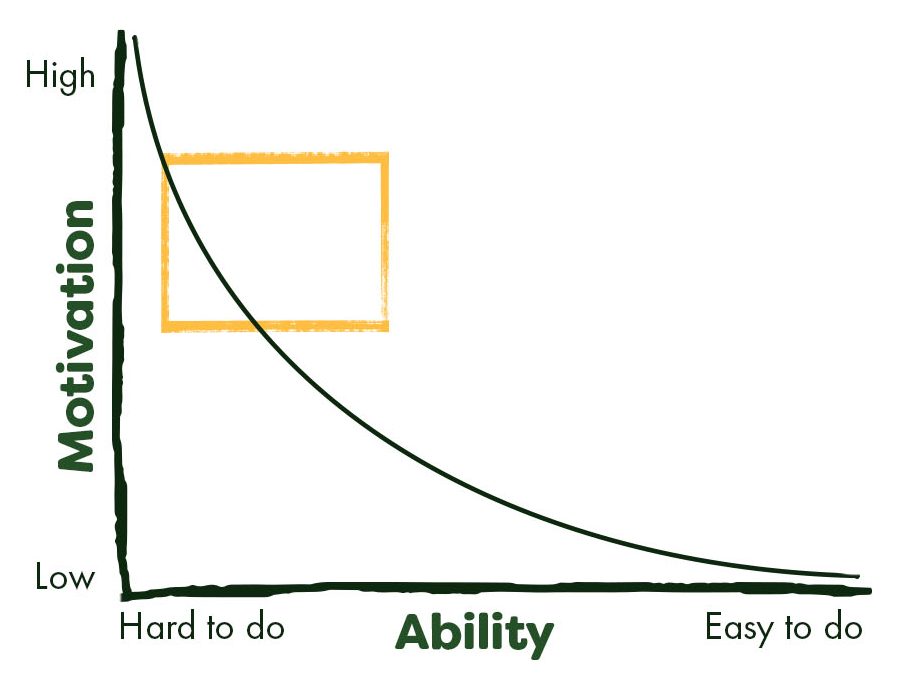
To understand the user’s needs and how to help them, designers will then outline the character’s potential goals in relation to the product (Ralph, 2017). By understanding which services the user prioritizes, the designer can optimize the experience by creating new tabs, clearer signifiers, shorter pathways, etc.
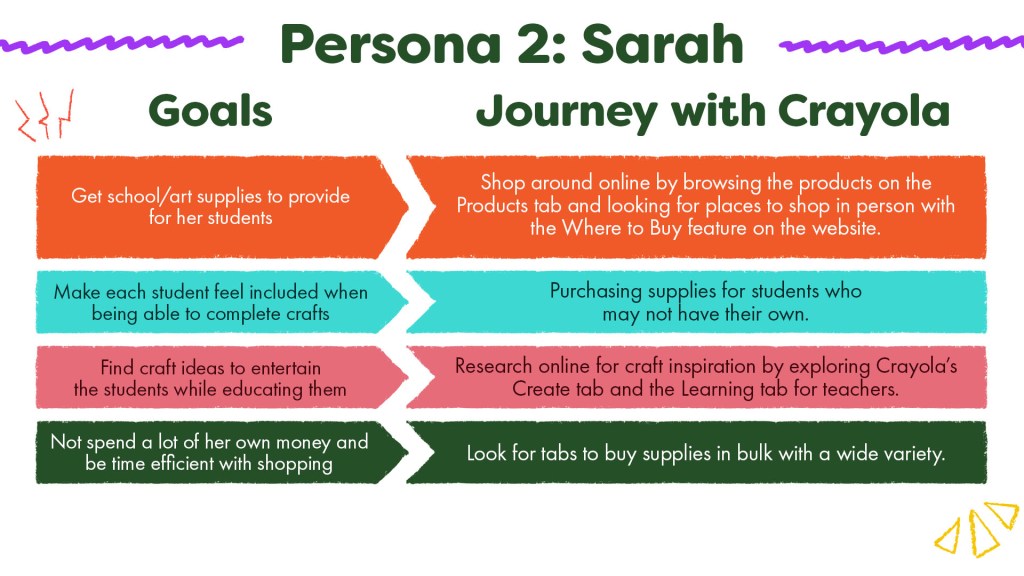
Motivation and ability play a large role in how likely a user will complete an action. The harder it is for a user to reach their goal, the more effort the designer must put in to motivate them to work past roadblocks. In a persona, the designer should outline potential motivating factors, inhibiting factors, and triggers so they can create an interface that makes the user more likely to achieve their goals (Ralph, 2017).
For Lauren, motivating factors include de-stressing and feeling creative, but not feeling inspired or having the right supplies can inhibit that motivation. However, seeing new crafts to try and new products can trigger her to shop with Crayola.
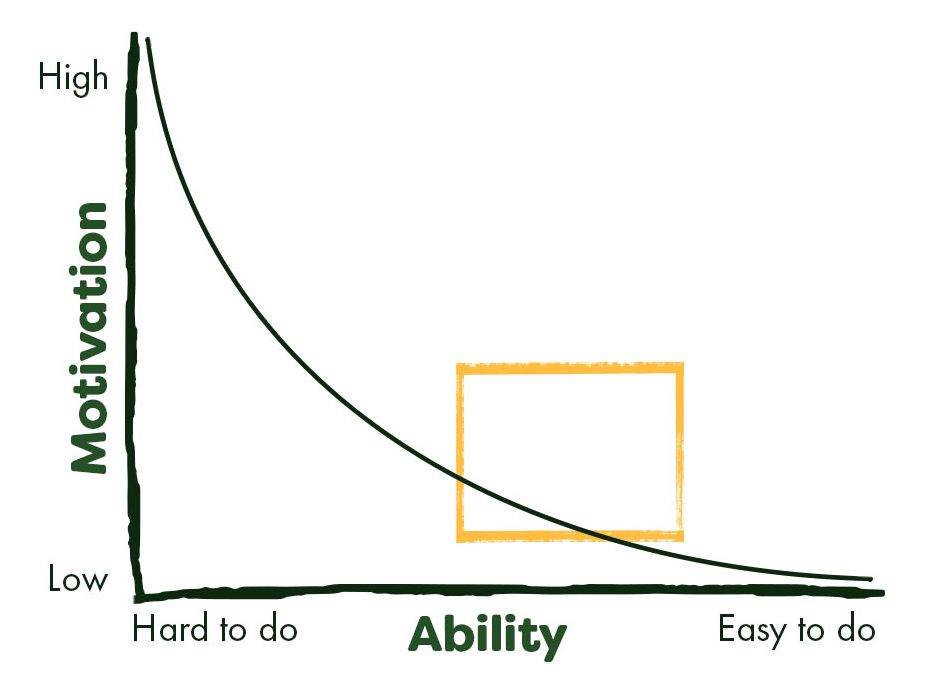
In Sarah’s case, she is motivated to support her students by buying school supplies, but a low budget and limited resources could inhibit her. Seeing online deals and easy places to shop can then motivate her to purchas the supplies she needs.
Influencers and Environment
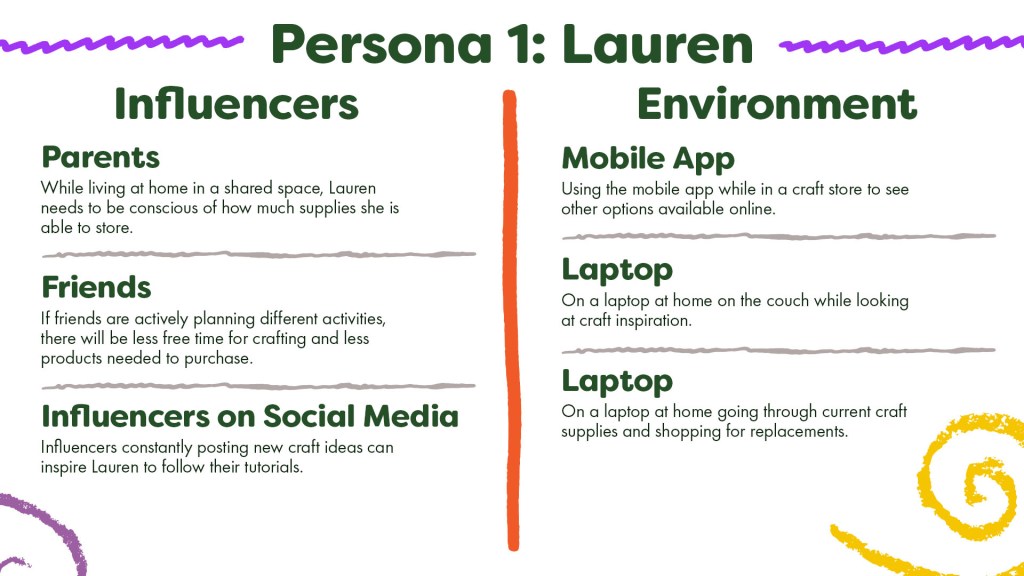
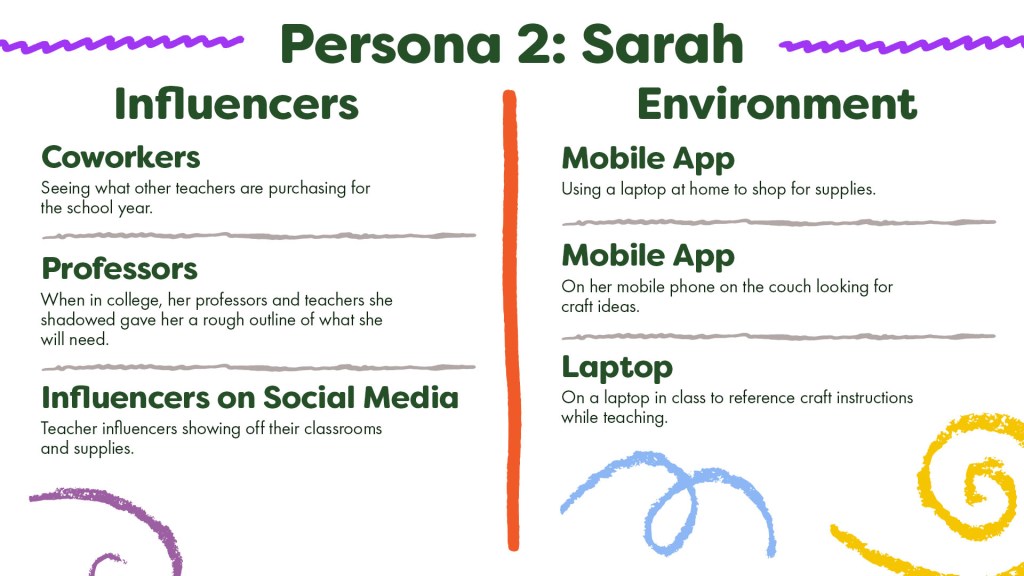
Beyond the user, the designer needs to consider who in the user’s life could influence their decision and what environment they use the product in.
Persona Family
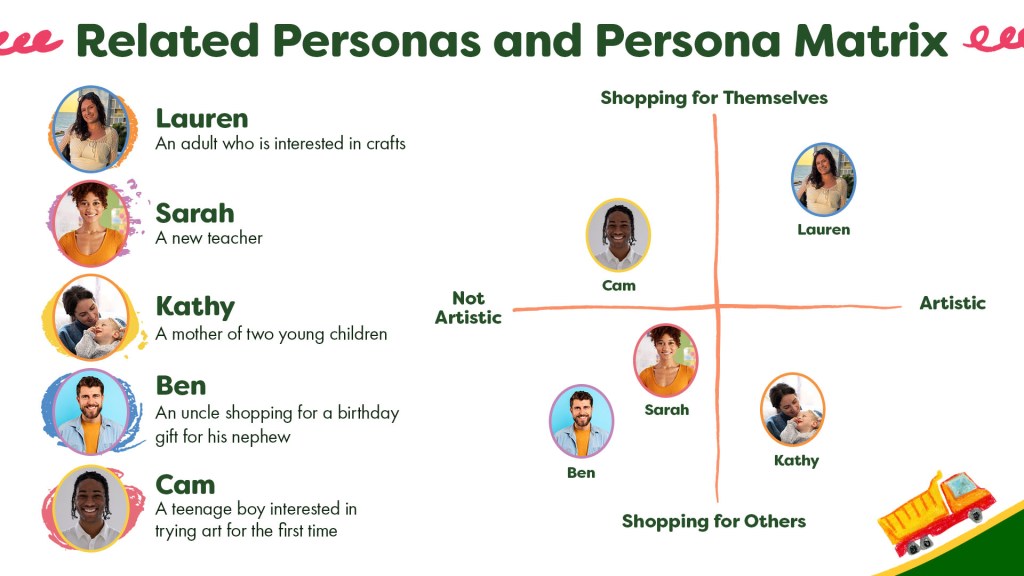
In the persona family, the designer can see all potential users represented as individual characters. By grouping them, the designer can easily visualize how they all interact with each other and create sublinks based on potential goals. A persona matrix is extremely helpful in this scenario because it places them in a single grid based on their relationship to the product’s overall user goals.
For Crayola, I created a matrix measuring shopping for themselves or others and art experience or no art experience.
While personas are extremely useful in developing any product, designers should revisit them frequently to see what needs updating. As users develop and culture shifts, users’ goals shift with them. Creating personas is not a definitive process but an interactive process (UX Mastery, 2015).
 LAUREN SCOOPO