
Once a designer has a goal in mind, you would think they would move right to creating the solution and calling it a day. While the jump from goal to solution is somewhat correct, there is a middle stage. The third stage of the design thinking process is ideation.
Ideation isn’t about finding the perfect solution on the first try. It is about exhausting every possible angle and entertaining every wacky thought that comes to mind.
“The probability of hitting the optimal region of the design space with a single idea is low… The probability of having one idea out of many come close to the ideal is high” (Harley, 2017).
The goal of ideation is quantity over quality (Harley, 2017), which sounds a bit crazy when you’re trying to solve a problem.
There are numerous ideation techniques, both individual and group-based. They all use different methods, but they share the same goal: to combine your rational thoughts with your creative mind (Dam, Teo, 2020).
Our goal
In this post, we will be referring back to last week’s edition where we formatted POV statements based on user reviews on the App Store for three apps:
- Goodreads: Online reading tracker
- Patreon: Subscription-based content service
- Oura: App that connects to a smart ring that records and analyzes the user’s biometrics

For reference, the 2 POV statements for each app were:
Goodreads
- Users who are avid readers need an efficient system to organize their books and notes because it will allow them to easily recall what they have read, since a large library can feel overwhelming to review.
- Users trying to get into reading need a comprehensive search engine because the number of options can be overwhelming and confusing, leading them to not choose a book to read.
Patreon
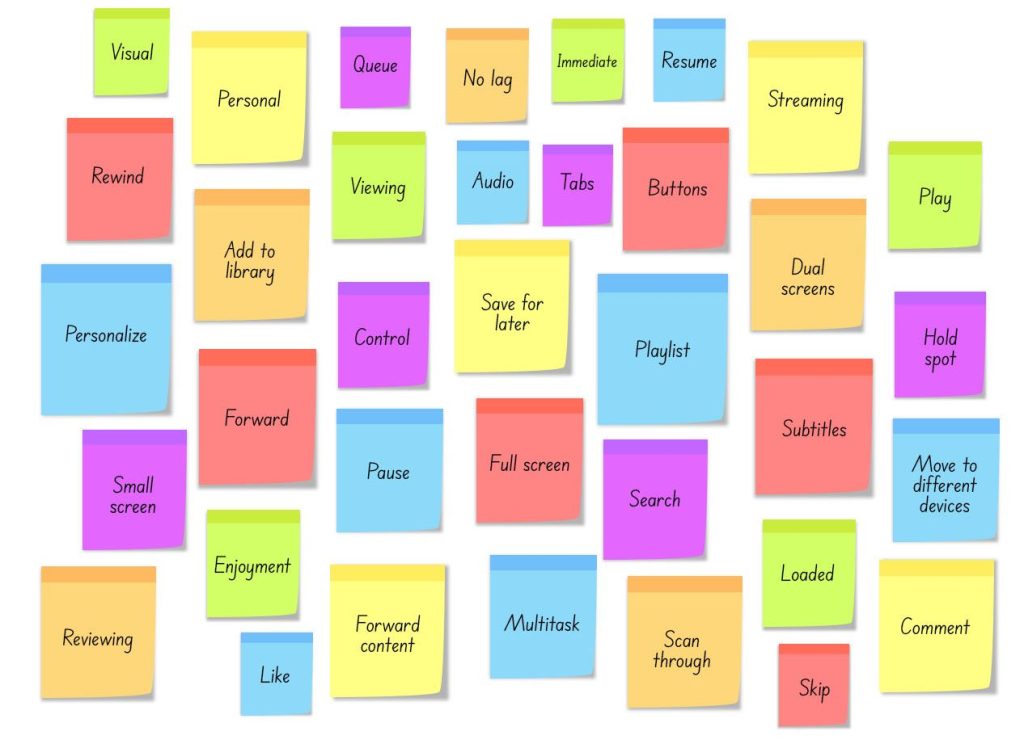
- Users viewing content need accurate, real-time ways to control the way they view content because a seamless viewing experience makes the platform more enjoyable to use.
- Users searching for a specific piece of content need an efficient way to sort the media because the longer it takes to find it, the more likely they are to give up and move on.
Oura
- Users who use an activity tracker need adaptable software to accurately measure movement because each user has different abilities and circumstances.
- Users who rely on biometric tracking need an accessible, personalized experience because the analysis can shape the health choices they make.
Our Priorities
As previously mentioned, many techniques are used in ideation sessions, but for our purposes we will be focusing on 4:
- Mind map
- Sketch
- Pessimist vs Optimist
- Braindump
In this exercise, we used each technique for each app.
Technique 1: Mindmap
When creating a mindmap, the participant starts with a central problem or topic written in the middle of a piece of paper. From there, they connect it to other ideas and possible solutions that come to mind. They then connect the ideas with lines to represent the thought process visually. (Dam, Teo, 2020)
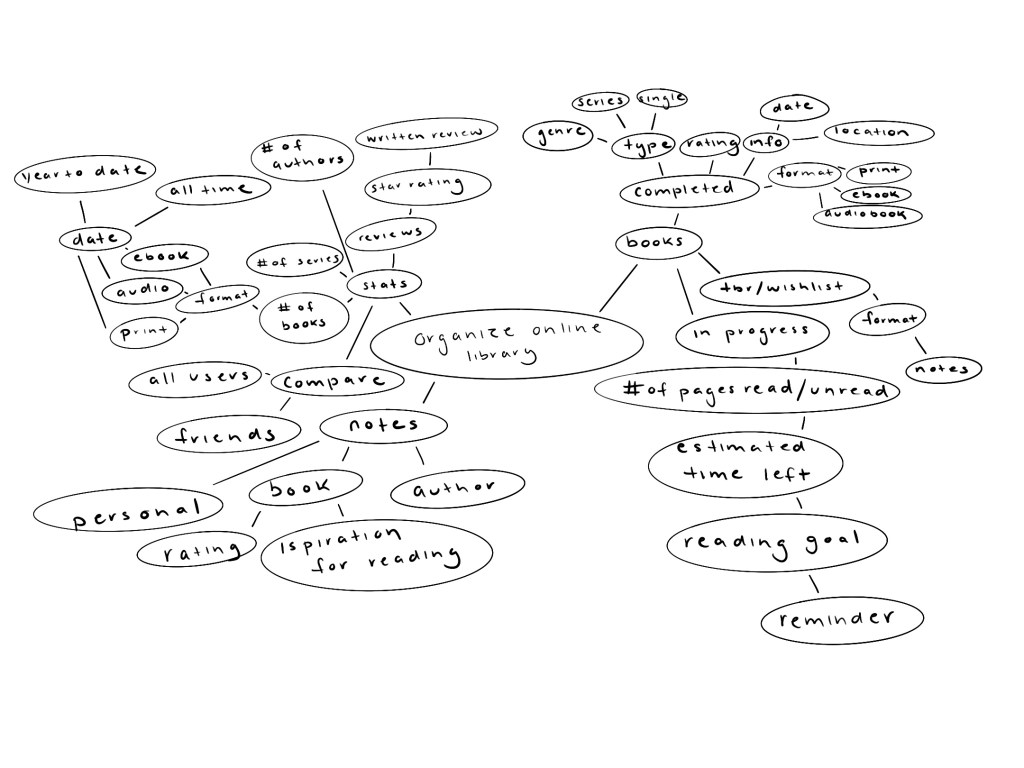
The first mind map we created focused on the problem of creating an efficient system to organize an online library like Goodreads. The key problem is in the middle of the graph, and as the graph expands, it includes all the elements that could be used as categories or new ways to organize the app’s sections.
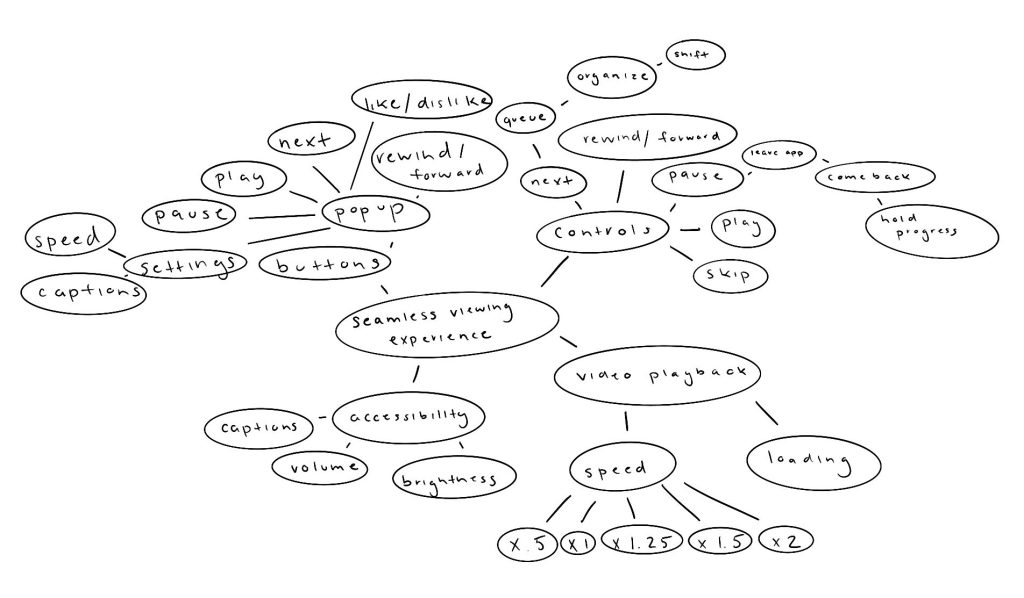
The second mind map focused on a seamless viewing experience in the Patreon app. You can see here how the seamless viewing experience was broken down into the individual controls a user should have when streaming content.
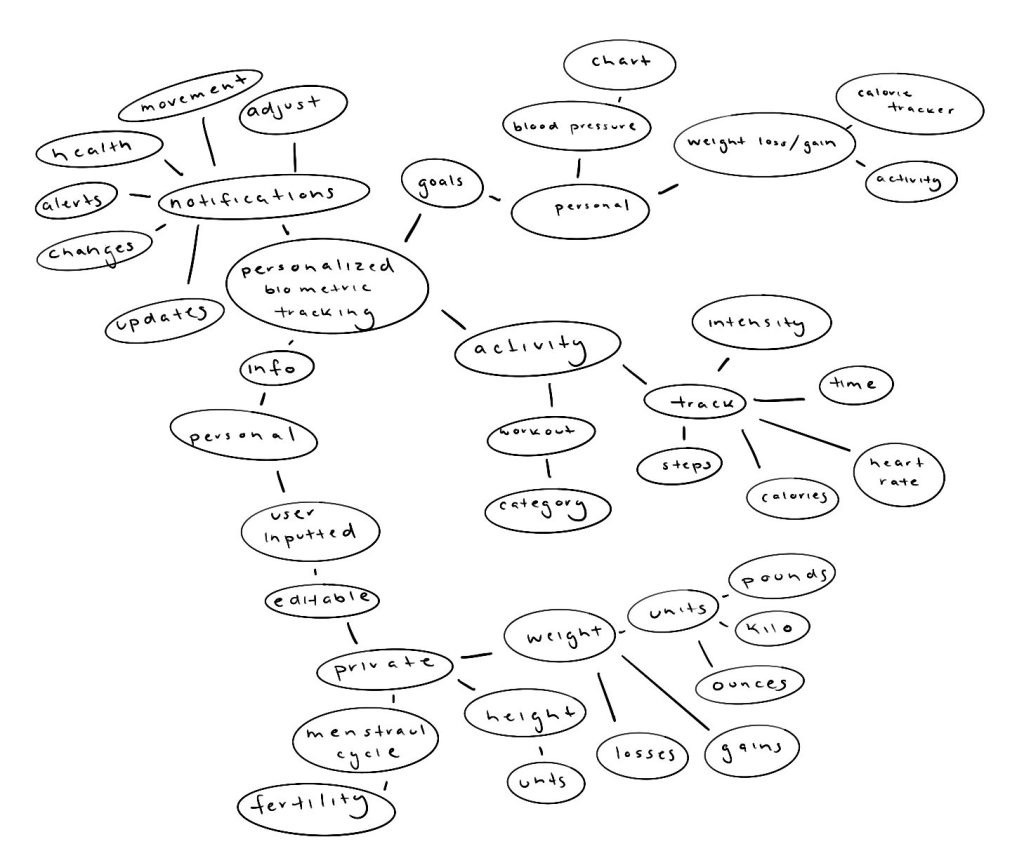
The third mind map broke down the Oura app’s personalized experience. Each bubble represents a topic that a user will prioritize when using Oura.
When choosing ideation techniques, it is important to select the method that matches the needs of the specific problem (Dam, Teo, 2020). In this example, the mind map was extremely helpful for the Patreon seamless viewing experience. The mind map allowed me to break down the individual controls and expectations a user has going into a streaming experience.
Technique 2: Braindump
Braindumping is when an individual sets a 3-10 minute timer and writes down any thoughts that come to mind about the topic at hand, then reflects on the ideas after the time is up (Dam, Teo, 2020).
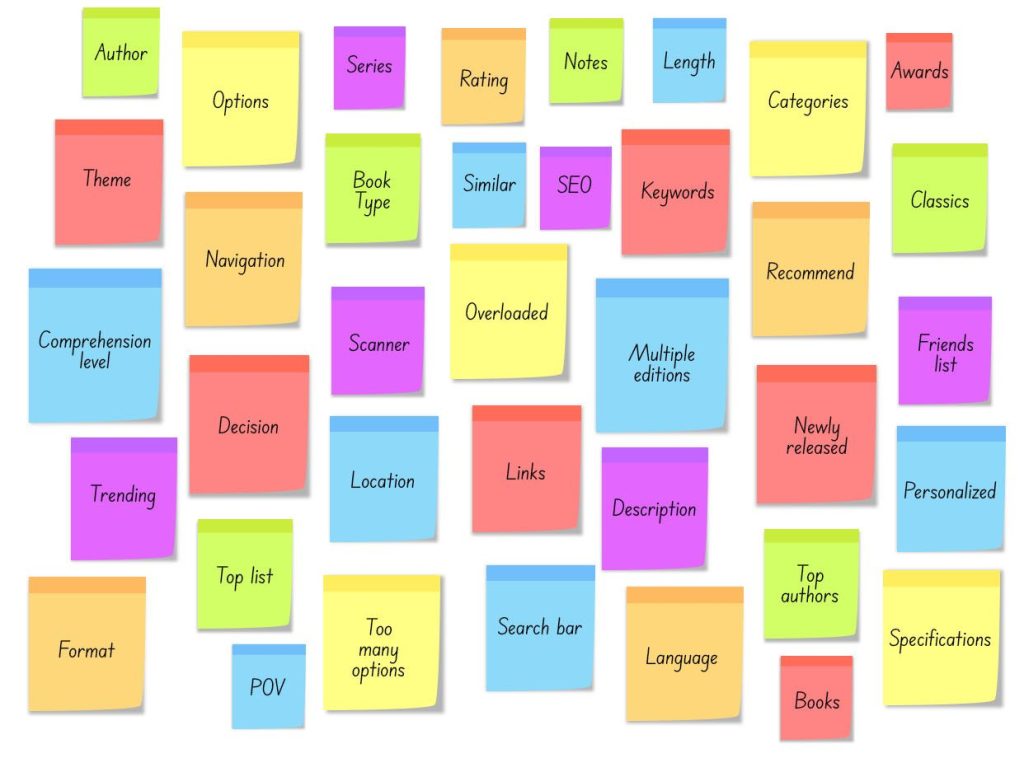
The Goodreads braindump broke down the parts of a search engine, especially for books, that improve the book-searching process.
For Patreon, the braindump session also focused on a seamless viewing experience and the ideas associated with that task.
Oura’s mind braindump generated ideas to make the app and the ring’s capabilities more accessible to users with varying abilities and circumstances.
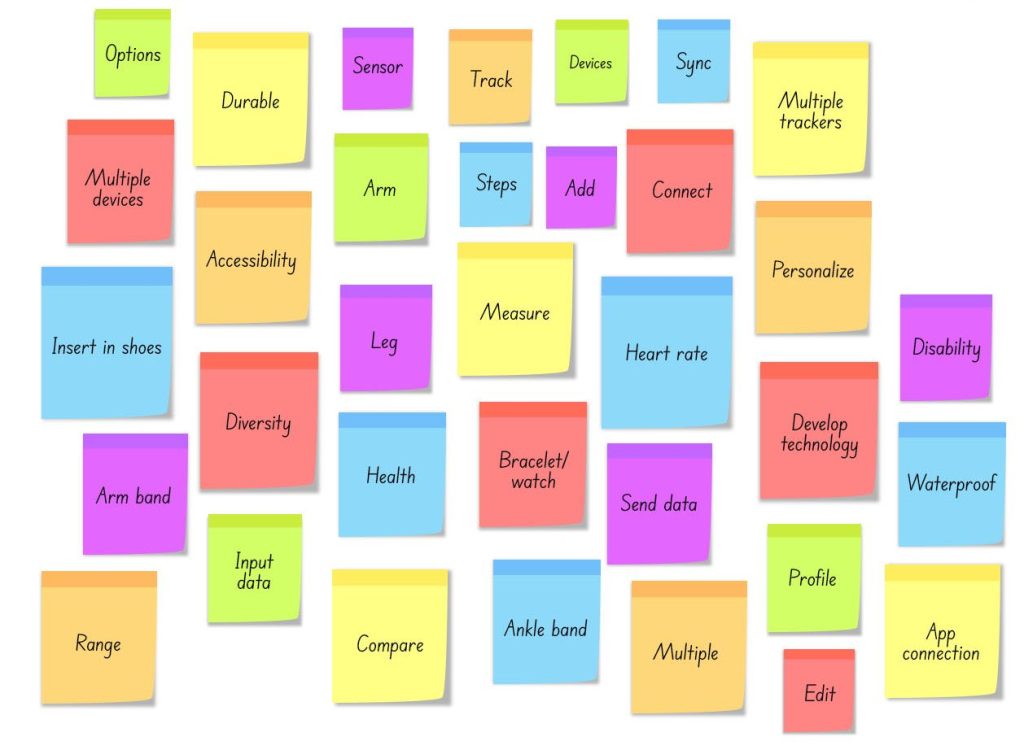
The braindump method was particularly helpful in the Oura session. The focus is on diversity of abilities, and the braindump method is focused on diversity of solutions rather than a visual entity.
Technique 3: Sketch
Sketching is extremely helpful when trying the express solutions visually. Sketching lets you quickly represent your thought process as you explore different solutions.
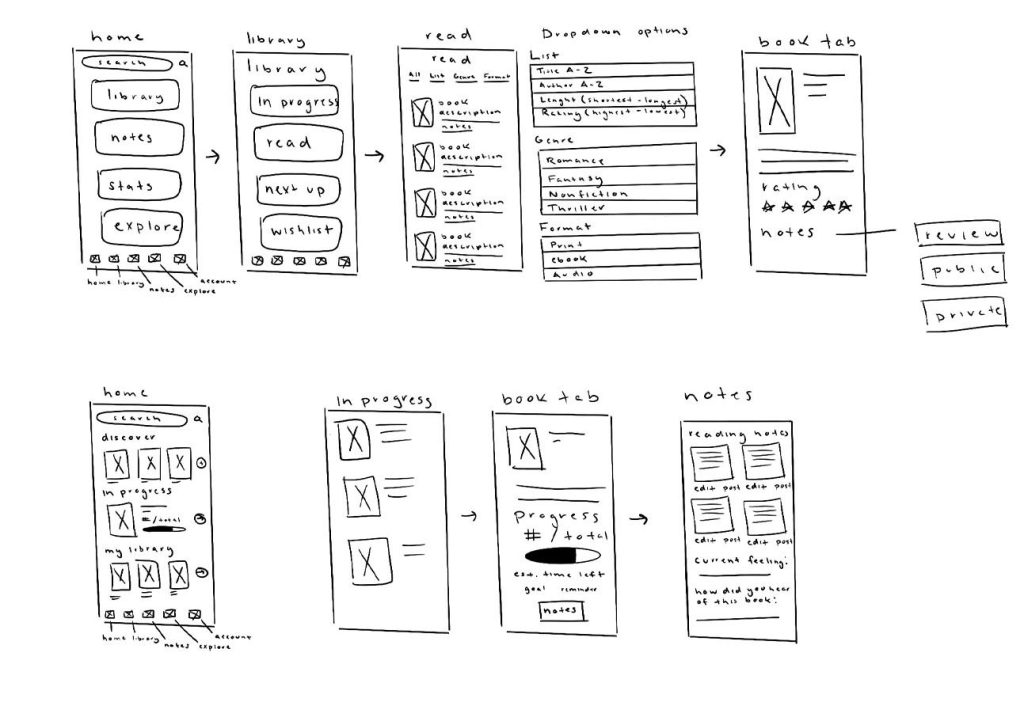
The first sketching session was for the Goodreads efficient organization system. As I began sketching, it quickly shifted to focusing on navigation and ways to narrow down the user’s library.
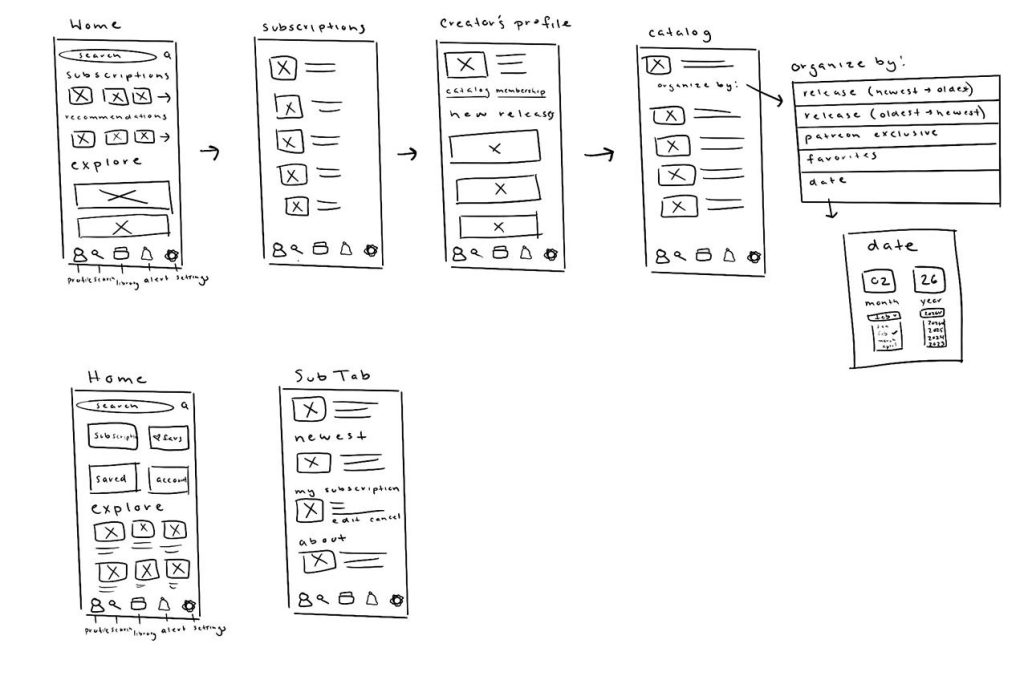
Second, Patreon’s sketching focused on creating various layouts that could potentially improve navigation and the user’s ability to locate specific media.
Oura’s sketching included tools to ensure accurate user information, with reminders to update it and reinforce the editing capabilities the user should have.
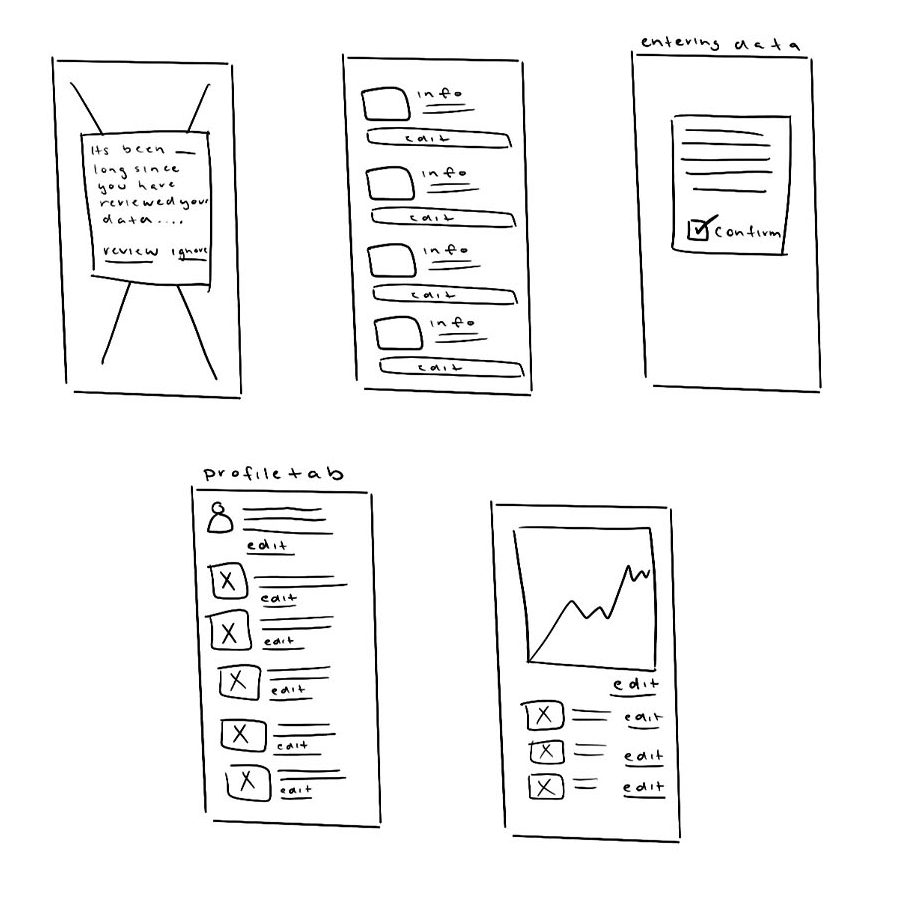
The Goodreads session is an example of a POV statement that calls for sketching. As a visual person, laying out the user journey and drawing the navigation pieces to improve the experience is extremely useful. When you start sketching a process, you can quickly see which elements need to work together and connect across the platform.
Technique 4: Pessimist vs Optimist
The pessimist vs optimist technique is a particularly fun exercise. The goal is to take a user with a pessimistic point of view and facilitate a conversation between them and a user with an optimistic point of view. As the conversation progresses, you will see solutions in the form of resolutions. (Investis Digital, 2013).
The first conversation I facilitated was for the Goodreads app. I created a pessimistic user (a new reader) and an optimistic user (an avid reader). I had the new reader voice their issues with using the search tool and not knowing where to begin.
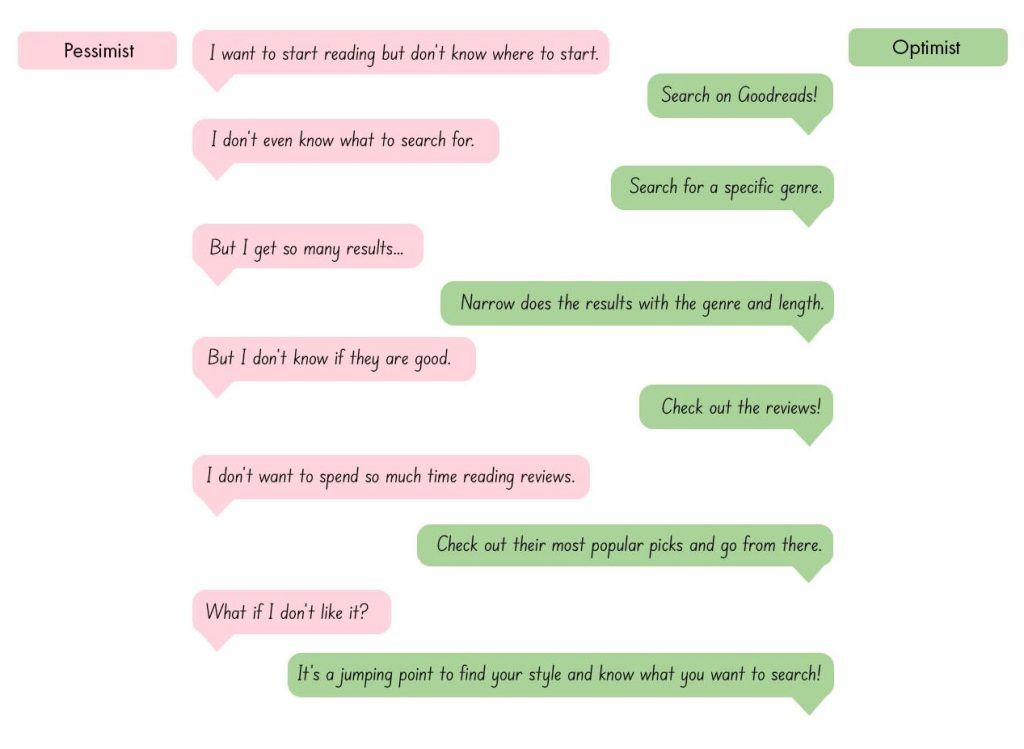
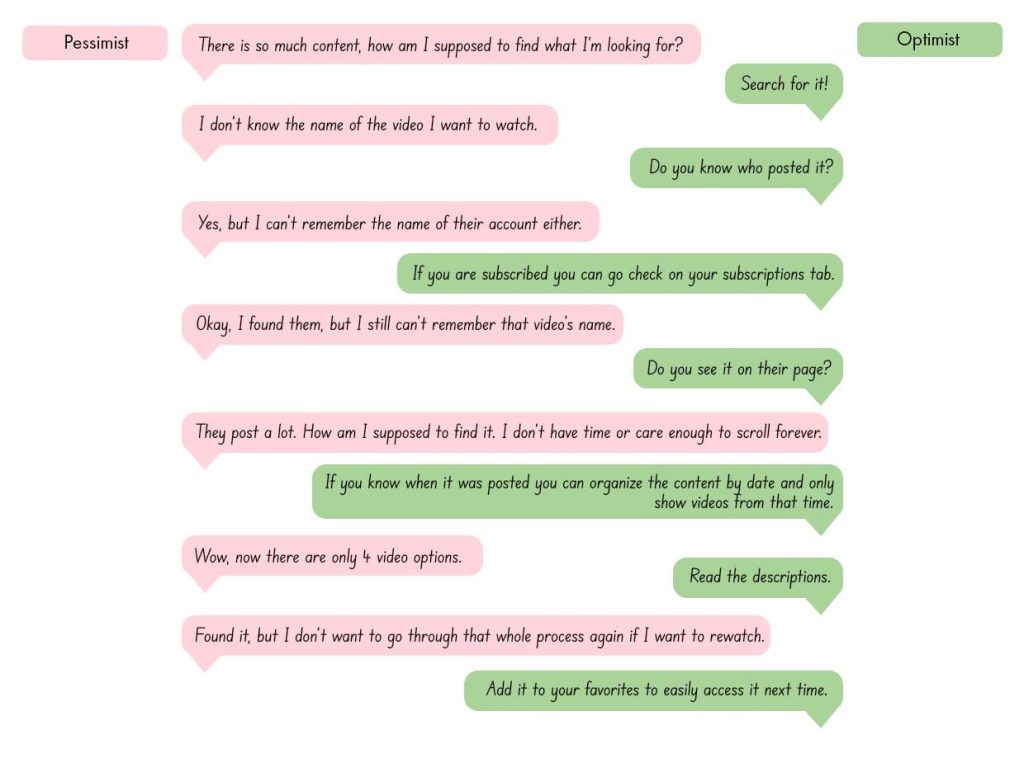
The second conversation was between a Patreon user having difficulty locating a specific video and a second user offering solutions.
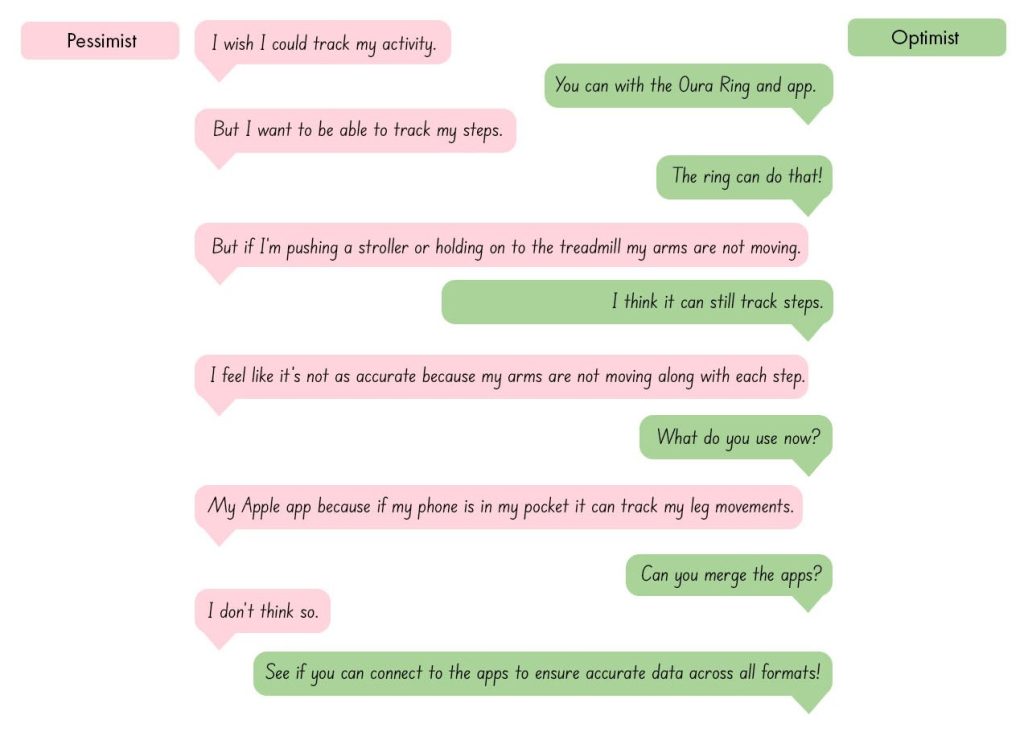
The third pessimist vs. optimist example was for the accessibility of the Oura app and its ability to track activities accurately.
The Patreon and Goodreads examples aligned particularly well with this method. Since they were more step-by-step issues, breaking down every roadblock a user could face was useful when ideating solutions.
Final Review
Overall, every ideation method works. It just depends on the scenario. As shown in these examples. Specific problems call for specific ideation methods to get the most out of the experience. The goal of ideation isn’t perfection. It is about opening the door to possibilities.

